













This Will Destroy You (Chris): "I wouldn’t encourage anyone to go through something like this unless they truly had no other option"
An extensive conversation with Christopher Royal King about his side of This Will Destroy You
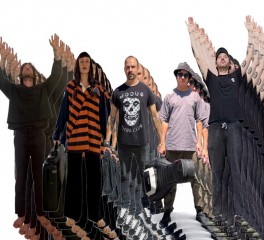
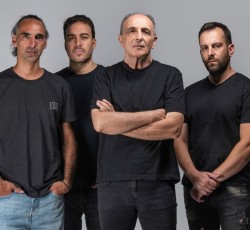
Now, some of you may be confused about what exactly is going on with This Will Destroy You. Let me help. The iconic instrumental band (which you can explore further through our guide) had been suffering from internal disagreements for a long time, eventually leading, after many twists and turns, to both of its core members, Christopher King and Jeremy Galindo, retaining and using the band’s name independently, with each version of the group following a different path.
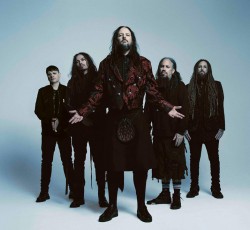
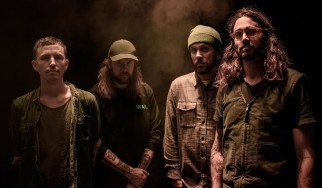
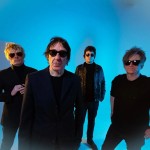
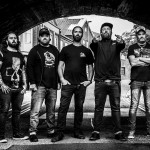
A strange situation, one might say, and perhaps rightly so. But who is better to explain what is really happening than Christopher King himself? Christopher, together with Robi and Jesse, the remaining members of the formerly unified version of This Will Destroy You, will once again visit our country as part of performances centered around their landmark early albums, "Young Mountain" and "Another Language". While eagerly awaiting these shows, we sat down for an in-depth discussion with Christopher who, without hesitation, did not try to polish or soften things, but instead spoke honestly about his feelings regarding the band’s journey.
At the same time, we also discussed at length the peculiar trajectory of the post-rock genre and the band’s unusual relationship with it, his personal artistic pursuits, the different music projects of both sides of the band, as well as many strange and fascinating works in which This Will Destroy You or individual members of the band have been involved throughout the years. An engaging interview that perfectly sets the mood for their appearances at Wightball on June 2nd Gazarte on June 3rd.
Hello Christopher and welcome to Rocking.gr! It’s a pleasure to speak to you. How are you doing so far this year?
Nice to meet you! I’m doing pretty alright.
We will be glad to have you again here in Athens after some years you appeared - in a different lineup, but still - here along with The Ocean - and of course one day earlier in Thessaloniki. How do you remember this live show?
I actually wasn’t at that show. Around that time Jeremy decided to continue touring under the band name separately from the rest of us, with an entirely different lineup, despite strong objections internally. It became a pretty serious legal and personal situation for years before we were finally able to reach a resolution.
It was difficult because This Will Destroy You was never built around one person. A huge part of the identity of the band came from the chemistry and contributions of the people involved over a very long period of time. So seeing it reduced to essentially a rotating backing lineup was painful and honestly didn’t reflect what many of us felt the band actually was.
Our focus now is rebuilding something that feels genuine to the spirit of the records people connected with in the first place
So you are now as we know and you explained further, in a very unique setting where there are two different This Will Destroy You bands. How does this work so far for you? Is your TWDY going to release new music anytime soon?
It’s obviously a strange situation. But I think audiences are intelligent enough to recognize the difference between a collaborative band with deep shared history versus one person continuing a project with hired musicians.
Our focus now is rebuilding something that feels genuine to the spirit of the records people connected with in the first place, while also moving forward creatively instead of just recreating the past. And yes, there is new music coming.
Jesse Kees and I have continued collaborating outside of This Will Destroy You through our project Dreamage. We’re currently preparing to release our second album, "Beauty Demon", as a special European-only vinyl pressing limited to 200 copies, alongside a wider digital streaming release. That project has given us a space to explore a more intimate and experimental side of our writing together without the expectations attached to TWDY. It’s probably some of the most emotionally direct and texturally immersive music we’ve made.

Where was the main point of artistic difference where you decided to split the band in two?
I think the main difference was ultimately about what the band fundamentally is. Some people view a band more as a vehicle for an individual vision, while others see it as something inherently collaborative where the personalities and interplay between members are inseparable from the music itself. Over time those perspectives became difficult to reconcile.
I wouldn’t encourage anyone to go through something like this unless they truly had no other option.
This was quite an interesting choice to make that is not always an option. Would you advise other musicians in similar positions to take this option?
I wouldn’t encourage anyone to go through something like this unless they truly had no other option. It’s financially draining, emotionally exhausting, and it changes relationships permanently. But I also think there are moments where you have to stand up for the work and history you helped create, especially when you feel that history is being misrepresented or diluted.
However, your show in Athens will be amongst some that you will be performing "Young Mountain" and "Another Language" performed in full. Why did you choose those two albums to feature as a whole?
Those records represent two very important periods of the band creatively and emotionally. Young Mountain was us discovering a language together almost accidentally - there was a lot of innocence and rawness to it. Another Language was almost the opposite: much more intentional, textural, and emotionally exhausted in a way.
They also represent very collaborative periods of the band, which feels meaningful to revisit right now. I think audiences can feel when music came from a real collective chemistry versus something more assembled afterward.
I think "post-rock" became a convenient umbrella term for instrumental emotional music with dynamics
You have been collectively considered a post-rock band in your beginnings and during the writing of those albums, especially since you were one of the pioneering bands of that sound, however, you evolved your sounds progressively towards more experimental routes - how do you feel now about this genre label?
I understand why the label exists, but I never really felt fully connected to it. A lot of the music that influenced us wasn’t "post-rock" at all- ambient music, film scores, shoegaze, drone, electronic music, black metal, doom, etc.
I think "post-rock" became a convenient umbrella term for instrumental emotional music with dynamics, but it can also become limiting if people expect a band to endlessly recreate one specific formula.
Do you believe that the genre had a remission in the past decade after a very long period of prime?
I think the genre probably became oversaturated for a period and eventually started collapsing under the weight of its own aesthetics. There was a point where a lot of bands were reproducing the surface-level dynamics of post-rock without necessarily pushing themselves emotionally or sonically beyond the established template.
But at the same time, I think the core language of post-rock quietly spread into a lot of other worlds. So maybe the genre itself cooled off as a clearly defined scene, but the emotional and cinematic vocabulary it introduced never really disappeared, it just dissolved into the broader culture.
It feels like we’re finally getting the chance to reconnect not only with the older material, but also with a creative thread that was left unfinished.
Back in the show, you will be performing with your newest members, Robi and Jesse, who were not in the band when you wrote those albums. How has the practice with all of you been? However, they were present when you released "New Others" parts 1 and 2, where you experimented a lot with your sound. Did their presence played their role in your creative process and direction?
Robi and Jesse may not have originally written those records with us, but at this point they’ve both been part of the band for nearly a decade and have performed this material extensively all over the world. They were deeply involved in later eras of the band creatively and have a real connection to the music and its history. So, rehearsing these albums together doesn’t feel like musicians "learning old songs" - it feels more like revisiting a shared body of work that has continued evolving through years of touring and collaboration.
What’s also exciting is that this lineup never really had the opportunity to properly tour "New Others" the way we intended. A lot of that era was overshadowed and ultimately interrupted by the internal fallout happening within the band at the time. So in a strange way, it feels like we’re finally getting the chance to reconnect not only with the older material, but also with a creative thread that was left unfinished. There’s a real sense now of continuity between all of these different eras of the band rather than treating them like disconnected chapters.
Hope the staff at Vespertine restaurant didn’t get too burnt out of hearing the soundtrack on repeat!
Your latest release, was a one of a kind work. "Vespertine" was written as a soundtrack for a restaurant, to be played in its spaces. How did this collaboration begin and did you ever experience having dinner with your music on said restaurant?
It started as a very unusual commission where the idea was less "make an album" and more "create an atmosphere people inhabit physically." I actually loved that concept because it removed a lot of traditional expectations about song structure and performance. Collaborating with Chef Jordan Khan on different levels - whether it was audio or visual - was such a memorable experience.
And yes, hearing it in the actual space was surreal. I certainly felt out of place with how expensive the restaurant was but really enjoyed it. Hope the staff didn’t get too burnt out of hearing the soundtrack on repeat!
You Infinite" material actually began as what was originally intended to be a This Will Destroy You record.
What’s your thoughts on the "You, Infinite" self-titled release? Are you planning anything similar?
That material actually began as what was originally intended to be a This Will Destroy You record during a period where I was still involved creatively, before things internally fractured during a time of significant interpersonal and professional conflict within the band.
Eventually the project was reshaped and released in a different form without my involvement, so my relationship to it is understandably complicated. I don’t necessarily view the final release as representative of my creative perspective or where I wanted that material to ultimately go. At this point, I’m much more interested in focusing on the work that grew out of those experiences in a healthier and more collaborative direction.

"There are some remedies worse than the disease"(e.c.: a This Will Destroy You song title) : Can you give us an example?
Social media probably. Humanity collectively decided the cure for loneliness, boredom, insecurity, and lack of connection was carrying around an anxiety machine in our pockets that tracks us psychologically more efficiently than most governments ever could. It’s impressive honestly. We turned the entire human nervous system into a subscription model.
When you don’t have lyrics, the song titles almost become fragments of hidden context or emotional subtitles.
Back in the day, long titles for instrumental post rock songs used to be a cliché - was there a need to set the boarders of a story without words with the title?
Definitely. When you don’t have lyrics, the song titles almost become fragments of hidden context or emotional subtitles. Sometimes they were meant to frame the atmosphere of a piece, and other times they intentionally contradicted it or added ambiguity to it.
I also think there was something interesting about giving instrumental music narrative implications without fully explaining anything. It allowed listeners to project their own meanings into the music rather than locking it into one fixed interpretation. Choose your own adventure.
Are there any newer, upcoming artists that you have listened to and believe they deserve a mention?
I’ve really been enjoying ESP - they have a new single out called "Roxy" that is quite beautiful. Another great newish artist is Contacto "holding a dying flame". Also gonna suggest checking out the Swedish duo Horse Vision. Ok I’ll shut up! I listen to too much music.
One of the biggest shifts for me personally over the past five years was stepping away from drinking. It changed the way I experience touring, collaboration, and even creativity in general.
What would be your wish for Christopher’s This Will Destroy You to achieve in the future?
One of the biggest shifts for me personally over the past five years was stepping away from drinking. It changed the way I experience touring, collaboration, and even creativity in general. There’s a lot more clarity and presence now, and I think I’m able to engage with the music and the people around me in a healthier way.
I think there was a period earlier in the band where chaos and instability were almost treated as inseparable from making emotional art, and over time I realized that mindset can eventually wear people down more than it inspires them. These days I’m much more interested in building something sustainable and genuinely collaborative. Ironically, the music feels more emotionally open to me now because of that.
Outside of the band, I’ve also spent the past few years expanding into more visual and multidisciplinary creative work — collaborating on projects connected to Sega Bodega, Marie Davidson, and producer Frank Dukes, as well as visual campaign work for Valentino.
Being around artists and producers like that - people who are incredibly gifted but also very open, curious, and collaborative - really shifted my perspective creatively. It pushed me to think beyond the traditional boundaries of what a band or even a song can be. I learned a huge amount musically just from being around those environments and approaches to sound, texture, and experimentation, and I think all of that is naturally feeding back into what we’re doing now with This Will Destroy You.
So honestly, my hope for the future of This Will Destroy You is not just to preserve the past, but to let the project continue evolving in a way that still feels human, exploratory, and emotionally real.
Thank you so much for taking the time to answer our questions. Please finish the interview with something you want to share with our readers!
Just gratitude honestly. The fact that people still care about this music after all these years - across different countries, generations, and periods of our lives - is something I don’t take for granted.
We’re very excited to come back to Greece, and I think these shows are going to feel very intense and very special for us.
I’m also beginning to reactivate Light Lodge, which had been quiet for a long time. It originally existed as a small imprint I ran over a decade ago, but moving forward I’m rebuilding it more as a listening-focused creative space centered around immersive performances, experimental releases, and multidisciplinary work. A lot of what I’m interested in now exists somewhere between music, atmosphere, film, installation, and collective experience - so Light Lodge feels like a natural place for those ideas to live moving forward.
Mostly though, I’m just excited to reconnect with people again in a more meaningful and present way. Thank you for listening and supporting us for all these years.