


![[7+1]: Αγαπημένες ταινίες τρόμου της τελευταίας δεκαετίας](https://images.rocking.gr/cine/2019/150x150/halloween-cover.jpg)


Messiah: "The Tape-Trading Scene Took Us to the Next Level"
R.B. Brögi looks back on four decades of Messiah, from the Swiss underground and the cult records to the reunion and the fire that still burns
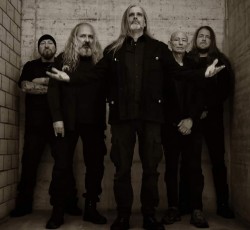
It’s amazing what time does to you. More than four decades after the founding of the legendary Messiah, the Swiss death/thrashers are remembered by younger listeners more for the cover of their best-known album than for their body of work as a whole. Unfairly so, since the band has achieved cult status among fans of the aforementioned genre, with releases that contain some truly exceptional moments. So, on the occasion of their first visit to our country, we spoke with their mainman, R.B. Brögi, who was more than happy to recount the events and experiences that brought the Central European band to where it is today.
Let’s go back to 1984. What was it that made you, as a young musician, want to start Messiah?
Well, it was more or less a coincidence. I met my future bandmate Tschösi through an advertisement for a musical instrument that was for sale. We discovered that we shared the same interest in metal bands and started jamming in a shelter. Tschösi screamed at the top of his lungs and then started playing bass, while I played the few metal riffs I knew at the time on guitar. It was simply a matter of time before we said, "Hey, let’s start a band."
Then we only needed a drummer. We found him in a video club. That was another coincidence, since we knew Jazzi - who would later become our drummer - only from our weekly encounters at the video club and our shared interest in horror movies. Jazzi wasn’t particularly into metal and felt much more comfortable with the softer rock of the ’70s. However, he enjoyed that first jam session so much that he joined the band, even though Tschösi and I kept pushing him to play faster.
What was the metal scene like in Switzerland at the time? Was there really an underground scene where such an extreme band could survive?
Yes, there was an underground metal scene, mainly in Zurich, where every Saturday afternoon metal fans and musicians from bands all over German-speaking Switzerland would meet at a metal record store. And yes, of course, Hellhammer were already around in Zurich, followed later by Celtic Frost and a few other, even lesser-known bands.
It wasn’t really about survival, but rather about solidarity within the scene. The term "extreme metal" didn’t really exist yet - it was more of an avant-garde thing. What we were playing with MESSIAH wasn’t the kind of music that interested the metal industry at the time. It was simply too raw, too unpolished and too extreme. But we didn’t care - we just made as much noise as we wanted, without any particular ambitions.
"Hymn To Abramelin" was released in 1986, at a time when extreme metal was still developing its own language. Did you realize at the time just how extreme what you were doing really was?
No, not really. Since record companies simply ignored us whenever we sent them tapes, we decided to release an album ourselves. From our perspective at the time, it was simply a lot of fun.
Looking back today, there are certainly several reasons why this debut is so special. We had almost no money. A friend of ours had a small studio in our hometown of Baar, and he himself had nothing to do with heavy music. We only had an analogue eight-track recorder and this huge mixing console covered in all those knobs - at first, we didn’t even know what to do with it.
Someone explained it to us, and then we did everything ourselves. Nobody interfered. I think it’s precisely those circumstances that make this album so special, because it is so authentic - exactly as we had imagined it.
I said to myself, 'Okay, you’re going on the cover of our new album', and I tore out the December page
"Extreme Cold Weather" took Messiah one step further. What was the main direction you had in mind when you were writing it?
I should point out that it wasn’t necessarily just the album "Extreme Cold Weather" that took us to the next level. It was more the tape-trading scene and the ever-increasing number of shows we were playing abroad at the time.
Musically, we continued to experiment. Tschösi was constantly pushing to become more extreme, whereas I was focused on my guitar sound and the overall atmosphere. Jazzi had by then got used to playing fast and had become comfortable with our music. However, the first differences between us began to emerge, eventually leading to my departure from Messiah in 1987.
The title "Extreme Cold Weather" and the polar bear on the cover have since acquired cult status. What do you remember about the creation of the artwork?
Actually, it’s quite a mundane story. We had already finished the title track, with its simple lyrics — something along the lines of "we don’t give a damn that we have to walk to school in this winter cold," a little rebellious - along with a few other songs.
At the time, I was an apprentice designer, and one day, while fooling around at the office, I was flipping through an annual calendar hanging on the wall directly in front of me. On the December page, the polar bear was staring at me in such a provocative way.
I said to myself, "Okay, you’re going on the cover of our new album," and tore out the December page, which, of course, was missing later when December ’87 came around (laughs). That’s really the whole story - there was no particular plan or anything like that.
Was there already an intention to use humour and unusual imagery instead of the usual horror and occult clichés of metal?
No, that wasn’t part of any plan - it just happened, and it suited the title track.
"Psychomorphia" is one of the most interesting moments in Messiah’s history. What exactly was happening within the band at the time that led to this musical transformation?
When I restarted Messiah in late 1989 / early 1990, I initially had my own ideas and a desire to evolve. Thanks to my new bandmates, suddenly so many more things became possible than they had been with the old Messiah.
I continued experimenting, incorporated more clean guitar sounds, became interested in film music, and started playing keyboards. The long intros and outros and the strong atmosphere were important to me.
It was a very risky move, however - and it eventually led to a deal with Berlin’s Noise Records. From that point on, we had far greater possibilities in terms of production and finances, which ultimately shaped the band’s most successful line-up of that era.
With "Choir Of Horrors", the most recognizable version of the Messiah sound seems to have fallen into place. Do you consider it the band’s real breakthrough?
Yes and no. On the one hand, we had now created a really good album with a professional record label and a fantastic producer.
However, it’s also worth mentioning that most of the major European magazines continued to ignore Messiah or, when they did write about us, would always throw in a little jab as well, accompanied by a forced smile.
But we didn’t care - because by the time "Choir Of Horrors" was released, at the latest, we had realized how large a fan base we had already built up by underground standards. Messiah never relied on the music industry, but on loyal fans who appreciate our authenticity. We are very grateful to them for that.
How do you remember your relationship with Andy Kaina? What was he like as a person behind the voice and the stage presence?
Andy was rather introverted and a very lovable person. At the same time, he was extremely honest and very direct when something didn’t sit right with him, which is why he would sometimes clash with people when he came out of his shell.
Nevertheless, we spent so many wonderful years together and had a great deal of fun, with countless crazy stories. I miss him very much.
I realized that I had actually already resigned before production had even begun. I decided to break up the band
"Underground", released in 1994, was a different kind of record and essentially marked the end of the band’s first era. Why did Messiah stop in 1994? Was it musical exhaustion, personal differences, changes within the scene, or something else?
Yes, it was a difficult period. Somehow, we got caught up in things that really weren’t that important, and that put a strain on our friendship as well.
We parted ways with bassist Patrick Hersche - completely unnecessarily, as I see it in retrospect - and Andy Kaina, being a close friend of Patrick’s, reacted by leaving Messiah. So that left only Steve Karrer and me. And all of this happened immediately after the fairly successful album "Rotten Perish".
So we started looking for new musicians because we wanted to continue. Steve brought his friend and bassist Oliver Koll into the band. After countless auditions - none of the candidates was a good fit - I called Christopher Johnsson from Therion. We had known each other since the first shows we had played together in Poland.
I asked him if he would like to become the singer for a new album by the band.
And that is exactly what happened, although he had clear ideas about what his role in Messiah should involve, particularly when it came to the lyrics. There was also the idea of making his vocals more hardcore, something I personally never liked.
Nevertheless, we made the album "Underground". The atmosphere at Berlin’s Sky Track Studio was very tense. Everyone was becoming increasingly distant from one another.
It was only when I heard the finished result that I realized - at least from my perspective - that it no longer had much to do with MESSIAH.
I realized that I had actually already resigned before production had even begun.
I decided to break up the band.

How did the reunion finally come about in 2017? Was it something you were planning, or simply an opportunity you couldn’t turn down?
At first, there was absolutely no plan for a reunion. The catalyst for what happened next - you could call it a "butterfly effect" - was a friend of ours in Lucerne. He organizes an annual metal festival, which is still held to this day.
In 2016, he called me and asked whether I still had any Messiah merchandise and whether I wanted to set up a stand at his festival. I said no - I was very busy with my family and my own business, and Messiah were the last thing on my mind.
In 2017, he called me again and asked me the same thing. I searched through my closet at home and found quite a lot of old merch, so I agreed. I asked Andy Kaina and Patrick Hersche if they wanted to come with me. And that’s how it happened.
At the merch stand at that festival in Lucerne, the response from so many Messiah fans was so overwhelming that I realized what was really going on.
The friend and organizer I mentioned earlier came back to me and said, "Don’t you want to play two or three songs at the Winter Festival?"
I called everyone and held a barbecue at my house. Then we went to the rehearsal room, and the fire was lit again.
We played a secret full-length show at the Lucerne festival, together with our friends Necrodeath. And then it happened: in January 2018, we decided to reunite with the classic line-up from the Noise era.
How did you feel seeing younger metal fans discover and embrace Messiah, even though the band had been away from the scene for decades?
It fills me with pride, joy and awe. For me, the fact that I can experience this - far removed from the big music industry - is the greatest reward.
Throughout our absence, and after the 2018 reunion, so many fans from our generation remained loyal - and more and more new fans are joining us, connecting with our spirit and passion.
It’s like it was back then. We are metal fans alongside young, younger metal fans. We bang our heads to metal with them, just as we did in our youth.
In our sixties, it’s our passion for metal that drives us - not business.
The older fans know that, and the new fans can feel it too.
All of us in Messiah have built our lives outside music. We do this out of pure passion - for as long as we still can.
After more than four decades, what do Messiah mean to you today? Are they still the same band that started in 1984, or have they ultimately become something completely different?
Well, first and foremost, it’s about the passion for metal. Beyond that, things in Messiah are different today from what they were in the past. I have very fond memories of 1984, although simply because of our age, you can’t really compare the two eras.
I really enjoy playing the old songs from back then and seeing the older fans at the shows joining in enthusiastically. But as a creative person, I like to keep moving forward, which is why I equally love playing the songs from the reunion albums "Fracmont" and "Christus Hypercubus" live. And, of course, songs from "Choir Of Horrors" and some tracks from "Rotten Perish".
This brings me to another point that is incredibly important to me - the line-up from that era. Friendship.
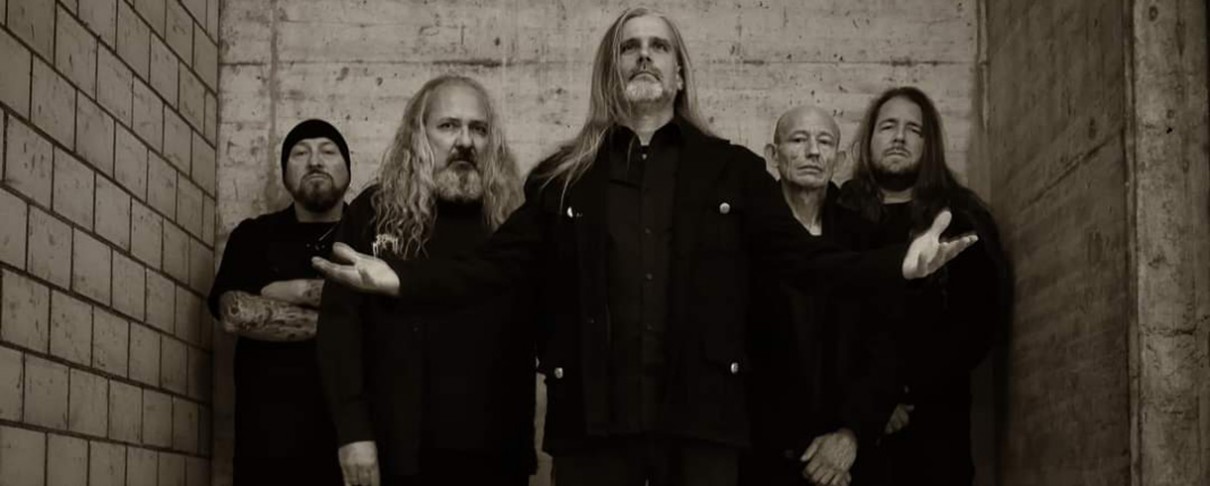
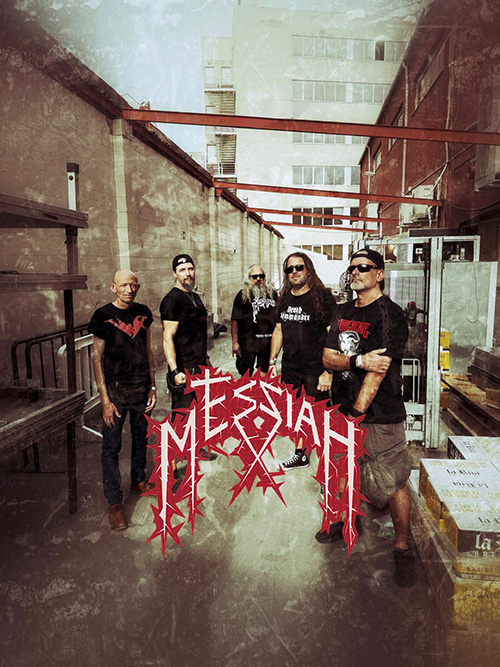
The 2018 reunion started with that line-up: friends - Steve Karrer, Patrick Hersche, Andy Kaina - now Marcus Seebach, V.O. Pulver for quite some time, and more recently Oli Stübi.
We have grown older, and the unnecessary little things that once led to arguments are no longer an issue. We make all our decisions through a friendly democracy. For us, that comes before the music - otherwise it wouldn’t work.
On top of that, we are 100% self-managed. We are like a family.
Our best friend Roger Wicki is also part of the reunion. In fact, he is a Messiah fan, but he handles all the management, booking, merchandise and social media - he even takes care of our dealings with promoters, arranges our travel and flights, and so on...
My family is also very close to him. How lucky are we - what other band could have something so valuable?
He is a member of the band - and we owe him the success of the reunion in terms of its promotion and organization. There is no management team that would work for Messiah with such passion and dedication.
We are endlessly grateful to him for that, because he takes care of both our old, loyal fans and the new ones who are joining us.
Messiah have gone through several line-up changes over the decades. For me personally, each one is unique, just as every fan is different.
We are very lucky to have our singer Marcus Seebach, who fits the band so well, both vocally and as a friend.
Life always brings changes.
With Messiah, I have always tried to preserve that distinctive spirit. That didn’t work perfectly with the album "Fracmont" - but it works with the current reunion, which has now been going for almost nine years.
Messiah have never been active for such a long uninterrupted period.
And both the older and newer fans appreciate it - an endless thank you to all of you!
Together, the fire continues to burn!