




















Buzzcocks: "We’re not recreating the past. We’re creating the future"
Steve Diggle talks about 50 years of Buzzcocks, Pete Shelley, punk, the new album and the poetry of life
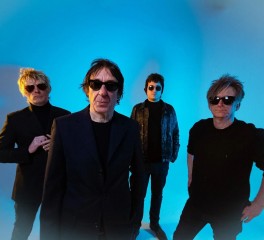
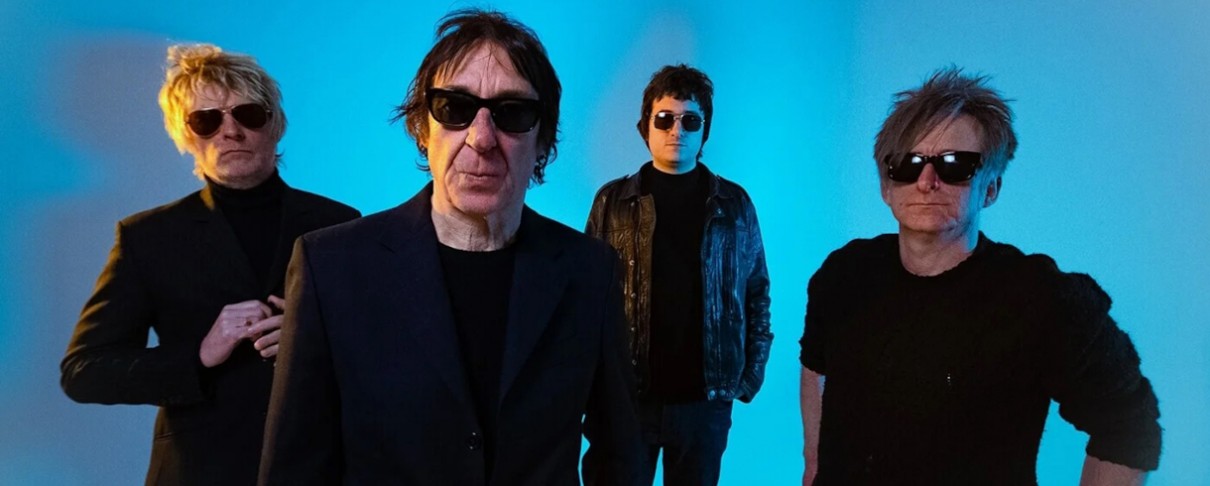
Fifty years after Buzzcocks were formed, Steve Diggle seems to have little interest in treating the band as a chapter of music history that has already been written. With the new album "Attitude Adjustment", Buzzcocks back on the road and five decades behind him, he would rather talk about the present - and, even more, about what lies ahead.
Shortly before Buzzcocks’ shows in Greece, we spoke to him about Manchester in 1976, the relationship between punk, politics and human life, the influence the band has had on subsequent generations, the loss of Pete Shelley, and how you continue to create while carrying half a century of history with you.
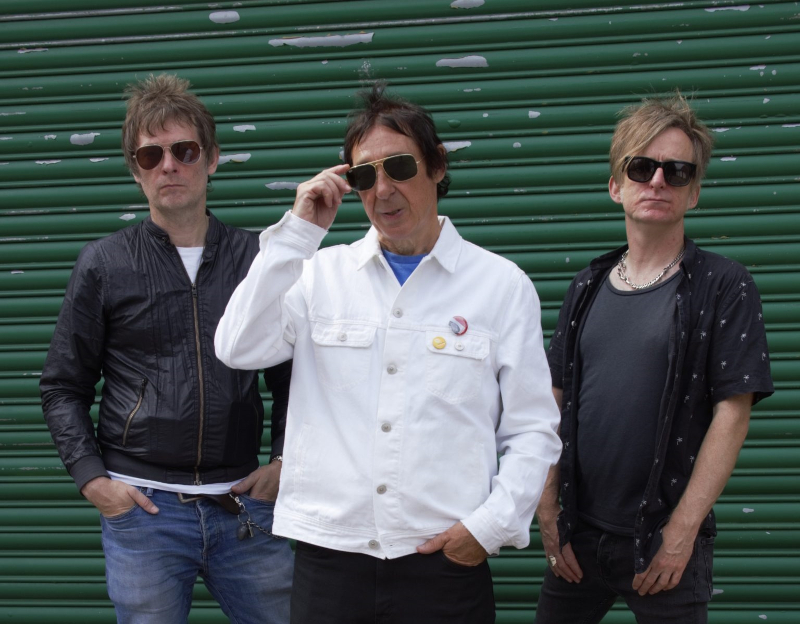
Where do we find you today, and how are you? It must be an incredibly busy time, with the new album, the tour and the 50th anniversary of Buzzcocks.
Things are going great at the moment. Everybody loves the new record. We’re on the road, playing to amazing audiences.
When we talk about the birth of punk, mid-’70s Manchester is central to its mythology. But you were actually there. What do you think made that scene what it was? And is there anything we tend to miss when looking back at it today?
In a way, we saw the Manchester punk scene being born. We were a Manchester band, one of the first bands in the city at the time, and that paved the way for all the Manchester bands that followed.
Buzzcocks also played an important role in bringing Manchester to life at that particular moment. We’re talking about 1976. We brought the Sex Pistols to the city, opened the show for them, and that put us on the map. But we also put Manchester on the map, because we were playing so many gigs around the city.
And that was the beginning of the Manchester scene.
Sometimes you have to look back to realize just how important that was at the time. Buzzcocks were there at the beginning of what would later become legendary Manchester.
Everything is political in a way. Even love is political. Relationships are political
Punk is often associated with anger and politics. But you also wrote very openly about desire and vulnerability. Many of the songs that defined you deal with desire, sex, love, rejection and disappointment. Did that feel radical in its own way?
Yes, it did. Everything is political in a way. Even love is political. Relationships are political.
But we embraced that whole spectrum of politics. I wrote songs like "Autonomy", "Why She’s A Girl From The Chainstore", "Fast Cars". They’re all political in their own way.
We wrote about the complexities of life and the human condition. Everything in the world is political, whatever you do. Even just being here is political.
But, as I say, we understood the complexity of things and approached songwriting, in a way, more existentially. And more philosophically.
It was something much broader than simple, obvious politics. We saw the world as something bigger.
It’s all there. The whole of human life is in Buzzcocks songs.
Buzzcocks are celebrating 50 years - an extraordinary length of time for a band. When you look back over those five decades, what comes to mind first? Are there gigs, places, people or small, seemingly insignificant moments that remain particularly vivid?
The 50 years seem to have gone by very quickly. But I remember being young, sitting in a room with a guitar, writing songs and wondering where all this might take me and what might happen in the world.
You have desires, you have visions, but you can’t really plan your life that way - especially in rock ’n’ roll.
Sometimes, though, you hit the right chord, you strike the right nerve.
So there are these deep memories going back 50 years. And then the journey begins: you play all over the world and realize that so many people can identify with those songs and understand their significance.
Because they weren’t just pop songs. We were singing about our lives and other people’s lives - about things they could recognize and understand.
And that’s probably why we’re still here, 50 years later.
We had a lot of hits in the British charts, but the music was about more than successful records. It wasn’t just entertainment.
In a way, it was a matter of life and death. Every moment in life counts. And that’s what the songs are saying beneath the music.
They weren’t just pop songs. We were singing about our lives and other people’s lives
There’s an interesting duality to Buzzcocks’ legacy: on the one hand, irresistibly catchy songs that became a gateway into punk for many people; on the other, an influence that runs through punk, hardcore, indie and alternative music. When did you first realize that Buzzcocks had become part of other people’s musical DNA? And how do you see that legacy today?
When we started, we were very punk. It was raw, rough, scratchy music in those early days. You can hear that on our first EP, Spiral Scratch.
But once you’ve done something once, you have to move on. You have to go somewhere else.
We discovered that we could write these catchy songs, with great melodies but also heavy lyrics. So we could be a powerful punk band while also having this great pop sensibility.
A good melody can travel a very long way - through the world, but also through people’s minds, because they can remember it.
And we also influenced the art of songwriting. We ploughed our own field, in our own way. There was nothing like Buzzcocks at the time. The sound was so distinctive and so unique that it influenced countless bands around the world.
It’s almost unbelievable how much. We became a "band’s band". We influenced so many bands, and even today you can hear the Buzzcocks sound in many of them.
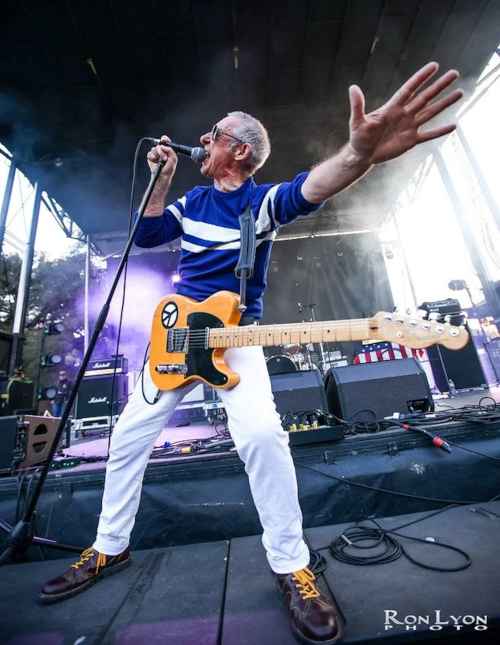
Today, in a way, we’re seeing a revival of the punk scene, while older bands are also returning with renewed energy - the Sex Pistols with Frank Carter, for example. Do you still recognize that sense of danger in punk? Where do you find it?
There’s still that sense of danger. When we play live, nobody knows exactly what’s going to happen. But at the same time, it’s an exciting kind of danger.
Some of our lyrics and songs may be bright, but others can be very dark. Some of our lyrics are quite dark.
That’s a more complex kind of danger than simply trying to shock people. It goes deeper into the human psyche.
But at the same time, there’s also this sense of celebrating life and feeling alive. You have to feel alive in the world - otherwise it’s like being dead while you’re living. That’s how we operate.
Over these 50 years, we’ve covered a huge amount of ground, through light and shade. We can be very punk and very pop. We perfected the art of being Buzzcocks.
And unlike other bands that reunite simply to play their greatest hits, we’re still making records.
Over the last four years, we’ve released two new albums: Sonics in the Soul and now Attitude Adjustment.
We keep moving forward. We don’t look back. We’re not trying to recreate the past.
We’re creating the future.
We don’t look back. We’re not trying to recreate the past. We’re creating the future
On Attitude Adjustment, the energy is still there, but the sound feels broader and more varied. There are moments that connect with more contemporary forms of punk, while elsewhere you can hear elements of American rock and ’60s pop. Did you consciously want to broaden the sonic palette on this record? What was the creative process behind it?
Yes. Every album has to be different. Every album has to be full of surprises.
You don’t want to repeat what you did on the previous record, or the one before that. With every new album, you’re looking for something else.
Yes, there are some very basic punk tracks and some very recognizable Buzzcocks elements. But when you get to around the middle of the album, we start exploring different areas.
And that’s very important. There has to be something in art that shocks or surprises you -whether you’re writing or painting.
It’s like Picasso. He never did the same thing twice. Why should we do the same thing twice?
We move forward. Attitude Adjustment and Sonics in the Soul are both great records. They complement the records we became known for all those years ago.
We’re on a great creative journey. It keeps flowing, like a river.
Pete Shelley’s death inevitably changed the internal dynamic of the band. By continuing Buzzcocks, you’re not simply carrying their history into the future; you’re also creating new music without one of the people who defined the band’s creative chemistry. Did you have to redefine your own role, both as a songwriter and as a frontman?
I wrote songs, Pete wrote songs. We were both songwriters in the band. And, of course, sadly we lost Pete - it’s been eight years now.
But life carries on, it evolves. It’s like Darwin’s theory of evolution. A swan comes along, travels down the river and disappears. Then another swan comes along, and it’s different from the one that came before.
Bands evolve in the same way.
I realize now that I’m the main songwriter in the band, whereas before it was Pete and me. You have to see it and accept it for what it is.
I’m still here in the land of the living, and we carry on.
I used to sing quite a few songs at the shows. Now I sing many more. And I’m writing a lot of new songs that fit what I do and the way I present the band today.
It’s as though we’ve entered a new era of Buzzcocks - a new golden era. There have been different phases, but this is Buzzcocks today.
And I think people love it. They come to the shows and they’re surprised because, as you pointed out about the albums, there’s now a great breadth to the songwriting.
I’m expanding the depth and breadth of what we do, both live and on record.
It’s becoming something more panoramic.
I’m still here in the land of the living, and we carry on
Beyond the music and the history of Buzzcocks, you shared a huge part of your life with Pete. When you think about him today, what do you remember most often?
I spent 43 years with Pete. We started the band together from the beginning.
And, of course, I have flashbacks. Images and memories keep coming back to me. But that’s human life.
A lot of people in my life have died - my father, friends, all kinds of people. You learn to deal with death.
You never get over death, but you have all those memories.
I think about Pete and I enjoy playing the songs he wrote, as well as the ones we wrote together. His memories are still inside them.
In a way, I’m keeping his name alive.
There’s nothing you can do about death. You can’t change it. You have to grow up and realize that you have to carry on with your life. Because we’re all waiting in the same queue.
So we have to celebrate life as it is now. I’m still alive, and we have to carry on with Buzzcocks for what they are today.
If Pete could look down on us, he would love what we’re doing now.
I’ll always have those memories. And that’s the only thing you can have when somebody dies: the memories.
But it’s going to happen to all of us. So while we’re here, we have to make the most of life.
You never get over death. What you’re left with are the memories
There’s a Buzzcocks lyric that seems particularly apt today: "Something goes wrong again and again and again." We live amid wars, a resurgence of conservatism and hatred that often finds its way into the mainstream. Having lived through several eras considered politically defining, how do you see the world we live in today?
It’s very complicated. But it always has been.
We’ve been through the First World War, the Second World War. Our ancestors went through all kinds of battles. It’s always been difficult.
Nobody knows where things are going.
"Attitude Adjustment" reflects some of that. There’s a song on the record, "All Gone To War", that describes the futility of war without taking anybody’s side.
It simply says that nobody should have to die because of a war. That’s essentially its position.
There’s also "Heavy Streets" on the record. So many people are having their phones stolen on the streets of London and around the world. That song deals with that.
There’s also a song about homelessness, "The Greatest Of Them All". It’s about a girl I knew who lived in a doorway and died in a doorway. She was homeless.
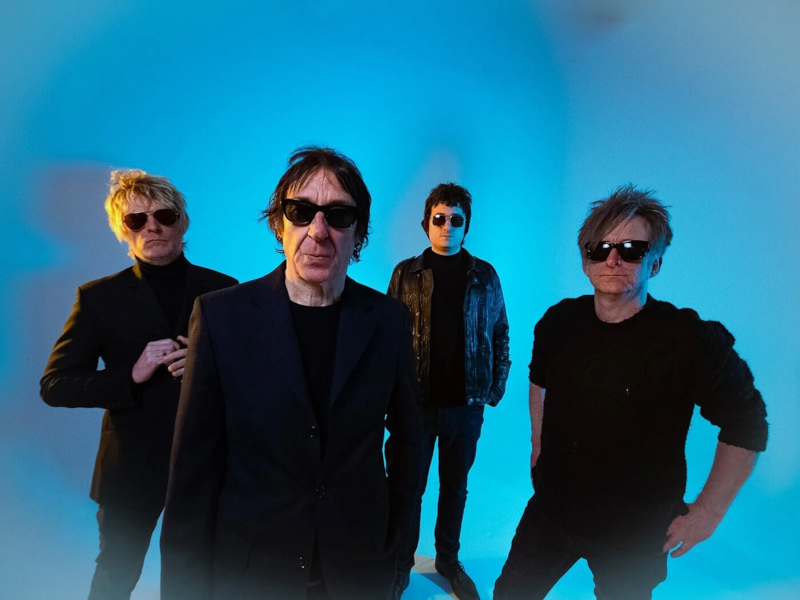
So it’s interesting that on this album I cover a lot of things that reflect the world right now. When I recorded it, I was surprised by how much social observation had found its way into it.
There’s also "Queen Of The Scene", which is almost about reality shows and the world we live in right now. You watch people on shows like Big Brother and Love Island and you wonder about the state of the human condition today.
And then there’s "Poetic Machine Gun", which is essentially about the world of communication. We have so many means of communication and, despite that, we’re not particularly good at actually communicating with one another.
So there are a lot of subjects on the record that are very social and deal with things we’re all experiencing right now.
For me, that’s a more punk way of looking at things. Because our punk came from observation: you see something, describe it in a song and hope that perhaps it might help change something for the better.
We have so many means of communication and, despite that, we’re not particularly good at actually communicating with one another
You’re celebrating 50 years of Buzzcocks and coming to Athens and Thessaloniki. What should we expect to see on stage in 2026?
First of all, expect a lot of excitement, energy and good feelings inside this whole "church of rock ’n’ roll".
We have an hour and a half to play in front of people. And in that moment, between the band and the audience, something third is created.
You can see the devil, God or whatever else you want to see in life. It’s what we call magic.
When an audience and a band come together, they create a kind of magic.
On the one hand, there’s the magic of celebration. On the other, there should also be an intellectual kind of magic.
It’s art, beauty and what I call "the poetry of life", up there on stage.
And I hope that inspires people to leave the show feeling better about themselves. And that it inspires them to carry on and become creative themselves, in whatever way they can.
It’s art, beauty and what I call ‘the poetry of life’
Interview: Chara Karagiannaki-Michaloglou
Edited by: Antonis Moustakas