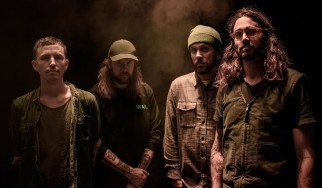














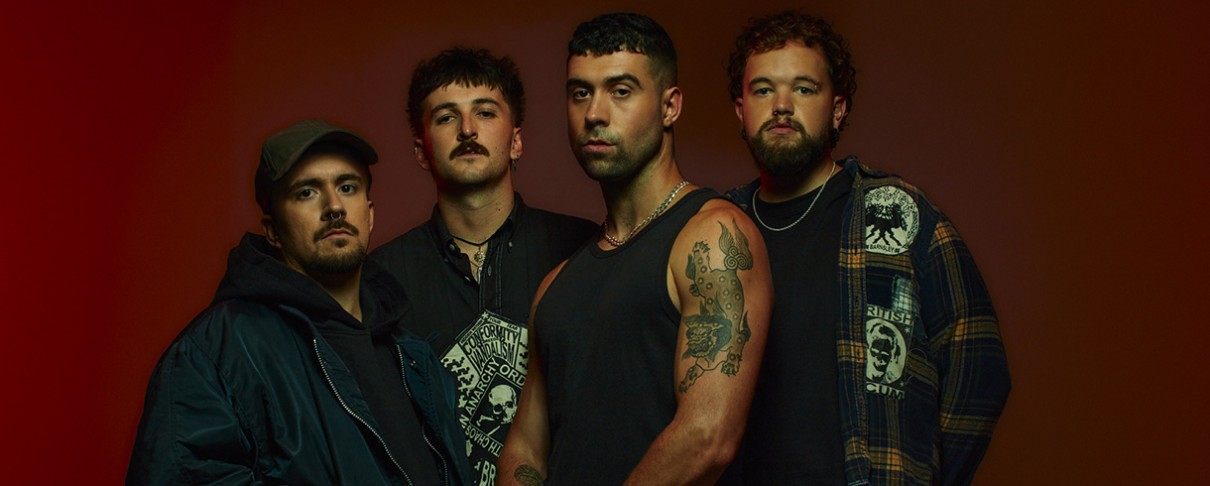
Maruja: "For as long as we are divided, together we fall"
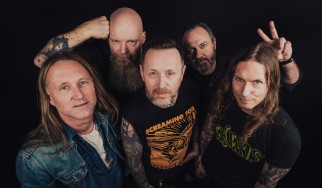
Riding a wave of growing recognition, the British band discusses the artist’s responsibility to reflect the spirit of their era and how they work to achieve it
They may have already won us over with their EP releases, but last year’s debut album confirmed it once and for all, firmly earning them the title of the most exciting new band in contemporary rock. With a sound unmistakably their own - while never hiding its influences - and, just as importantly, a voice that has something meaningful to say, Maruja rightfully claimed a place among the best albums of the year, both for us and across most rock lists out there. At least those that aren’t "dead and don’t know it."
Our conversation with the band ranged from their creative and songwriting process to the challenge of maintaining character and integrity as a band today. Naturally, as artists with a strong political perspective - one they are unafraid to express in their music - they could hardly avoid commenting on the state of the world as it stands (the interview, in fact, took place before the world took even darker turns in early 2026).

2025 was a landmark year for you: a third EP, your debut album, and a global tour counting around 109 shows. Has this new reality reshaped you, collectively or individually?
This year has marked a significant change in the structure of the band, we’ve toured north America twice and played shows in Japan and China, fans from both continents and ones further afield will be expecting us to tour there from now on. That’s every bands dream really. But this all happened within a year, so it’s taken a while to get used to that. We spent a majority of the year either abroad or in the studio, which has meant seeing loved ones a lot less. That’s been really strange. Going forward we need to plan our year in a way which allows us to continue to integrate with our community, remain healthy and fit for shows, write new music in a controlled manner whilst playing new and exciting places. This is now the expectation from our fans - more tours and more albums - and we’re very grateful to have this as our new reality.
You gradually went from releasing EPs to the debut album in the course of three years, instead of starting out directly with an LP. What was the reason for that and what were the benefits of this approach?
Ultimately it came down to money and time. As we mentioned previously, the expectation and reality of the band has now shifted - we make music full time and live off the money it creates - but at the start, there’s very little to no money in playing shows. Rehearsal rooms are expensive, everyone has different jobs so schedules don’t always line up and recording studios are not cheap. This makes writing, rehearsing and recording slow and unaffordable for a lot of artists. Recording an album is particularly expensive. Although "Knocknarea" & "Connla’s Well" came out within a year of each other, they were written, recorded and mixed between 2020 - 2024, using all the free time we could get from our producer Samuel Jones. This is most likely the reality for a lot of artists in the UK as costs are soaring high. Dropping our EPs this way did also help us mature and develop musically, but also grow a steady fan base. Those EPs are adored by people all over - with the North American tour and the Asia tour coming earlier this year in celebration of their releases.
Since jams and improvisation are central on how you create music, could you walk us through this journey? From rehearsal to a jam becoming more intentional.
It’s a very chill process a lot of the time. We chat, catch up with each other, go into the studio, someone puts a phone down to record, then start playing. We’ve been doing this for 5/6 years now. Between 2021-2023 we’d do this 20-30 hours a week - we released (on Bandcamp & YouTube) some of our favourite recordings as a compilation album called The Vault - you’ll be able to hear the types of jams we were making at this time. After we’ve recorded a jam, we normally go outside, play some football then go back in and repeat for a good few hours. When we’re too tired to carry on, we’d go back to someone’s house, make some food, have some wine then listen through and pick out the best bits. All the moments that are the most exciting and fresh are the ones we want to start writing into actual songs. The themes of what we’ve talked about that day tend to bleed into the emotion of that jam - Look Down On Us being an example of that.
Your music expands - while listening we experience somewhat of a shift, from an inner or almost claustrophobic intensity to a vast soundscape, at points cinematic, with a burst of emotions. What guides those transitions?
A lot of that mimics the improvised jams. Sometime we play for over an hour long, so it’s natural to have really intense moments followed by softer or wider cinematic moments. We try not over complicate things and just follow where we think the music is taking us.
Is it fair to say that your music and singing can be at times aggressive while also talking about love and positive feelings? How do these seemingly opposite things balance each other and what does that mean in the active pursuit and request for more love in the world?
We’re living in scary unprecedented times and we have a lot of anger towards the elite who are dividing our society. This creates fractured, vulnerable people who are desperately seeking refuge, so it’s really important to offer hope and some perspective for change. We wish to inspire those listening and create a community, as we see this to be a catalyst for change.

I was particularly impressed with the song "Saoirse" which (I understand means freedom) is dedicated to the people in Palestine but also has a universal message with its mantra of "it's our differences that make us beautiful". How much do you think people are divided by perceived differences and what causes can unite us, even in spite of our "leaders" intentions.
The UK - similar to many countries around the world - has seen the Overton window shift further to the right, with this process exacerbating the more unequal our society has become. The elite class who fund our political parties, news and media outlets have continuously blamed the increase in inequality on the most fractured and marginalised in our society, with the resurgence of fascism looming closely. It’s worked extremely effectively in the UK and the US in the past decade or so, but there are now voices offering change and opposition. To us it’s clear, there needs to be a change in the political elite and is why our message of unity is so strong. For as long as we are divided, together we fall.
"Pain To Power" absorbs multiple influences, from jazz and post-punk architecture to experimental and even hip-hop - yet it feels distinctly your own. During its creation, which musical or other influences shaped you most and how do you feed/fuel the writing and improv process?
I guess this has been a gradual build up of years of jamming with one another, in such a way that allows us to flow naturally between sounds. We listen to all sorts of music, so it’s no surprise that you can pick out some of these elements. Modern jazz artists like Kamasi Washington and Christian Scott Atunde Adjuah were pivotal artists for us when we first got infatuated with jamming. Although we don’t sound like them, you can clearly hear how they incorporate different genres so smoothly. So although we don’t sound similar, we certainly love and aspired to blend instrumental thoughts as easily as they can.
In an era where time feels relentlessly compressed - and the music industry moves at the same (exhausting) pace - how do you cope with that pressure? Does it take a toll? What’s your thought on creation and vulnerability?
We’ve always felt kind of isolated in Manchester - musically we’re very different to bands we were playing with in our early days – so we’ve tried to create our own lane ever since. Our team has always been supportive of that and it’s a philosophy we will continue doing. As previously mentioned, there may now be an expectation from fans to follow up with a new album whilst touring the current album everywhere, but the lessons from the past couple years have shown us to be patient and only do things when they’re ready.
On a similar note, how can a band exist, grow and reach a wider audience while at the same time maintaining integrity in a system of overpriced merch at concerts, a monopoly of ticket service providers, expensive vinyl records etc. Being independent feels increasingly difficult these days
It is increasingly difficult, it takes a lot of time and effort, sometimes that doesn’t even feel like it’s enough to scratch the surface, it can be demoralising. The previous question ties into this, but we’ve always tried to do things in our own lane. There can be a lot of distractions, but being consistent and strong in what we produce has always been our mentality. Before we released Knocknarea we spent most of our time just focusing on the business side of the band, from observing heroes and mentors of ours we realised that music is only going to make up a small portion of what we do, so getting knowledgeable about the business side is a very important thing to do. We held off releasing that EP for a while, just to make sure that everything was lined up correctly and that we could capitalise as best we could from that exposure. By the time we released "Knocknarea" we had so set up - as well as "Connla’s Well" already written - we could easily continue our momentum. Although there is so much competition out there, art is more accessible than ever. As toxic and damaging as the internet can be, platforms highlighting new music does really effect and help young aspiring bands - it did for us with "Knocknarea" & "Connla’s Well" gaining notoriety online, helping us to tour the US for the first time. If you’re strong, unique and consistent you stand a really good chance in gaining the reception of fans willing to support your journey, even if it doesn’t happen all at once.
We’re living through a time marked by turmoil, oppression and widening social fractures. In that context, how do you perceive the role of music - and the role of collective?
Nina Simone said, it’s "an artists duty is to reflect the times" and that is something we categorically agree with. It’s the choice of the artist, and we choose to talk about the times we live in.