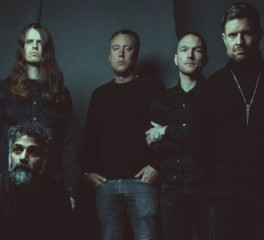

















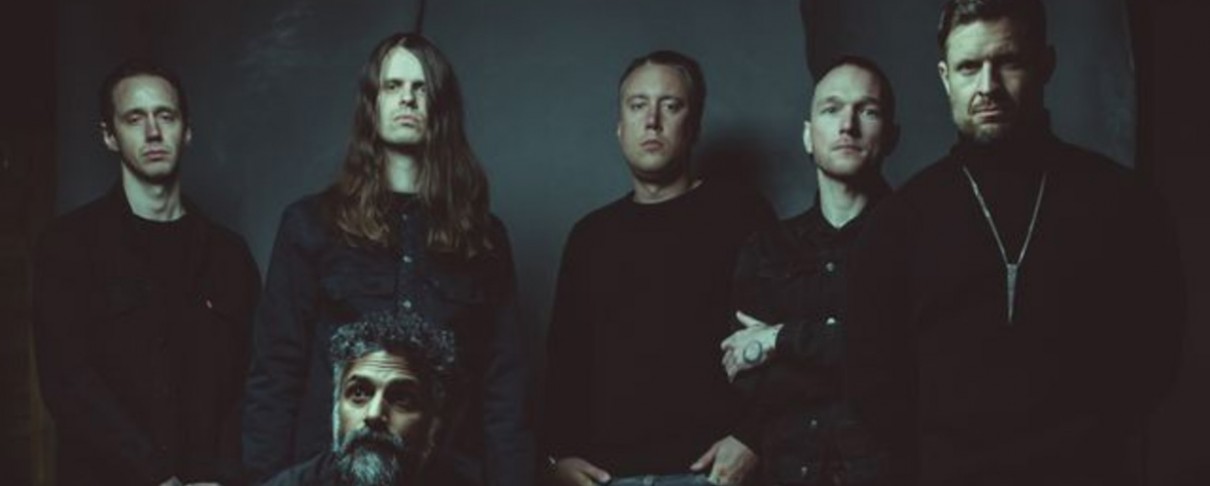
Cult Of Luna: "One mistake is to assume all we do is intentional"
An in depth interview with Johannes Persson for the latest Cult Of Luna album and live shows, just ahead of the new release
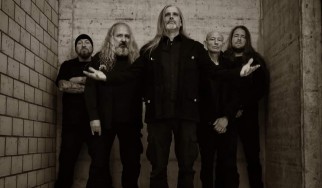
Hailing from Umeå in northern Sweden, Cult Of Luna emerged from the hardcore scene and developed a sound that brings together the weight of sludge metal and the atmosphere of post metal. Across records such as "Salvation", "Somewhere Along the Highway", "Vertikal" and "The Long Road North" and their collaboration with Julie Christmas, "Mariner", the band have continued to expand their musical language. For Cult Of Luna, that exploration reaches beyond sound: as Johannes explains in this interview, music, lyrics, artwork and live visuals form parts of a single whole.
Their upcoming album, "In the Shadow of Your Shadow", arrives on 6 November. In our conversation for Rocking, Johannes discusses a record that prompted painstaking work on his vocals and brought collaborations with Joe Duplantier and David Eugene Edwards. Alongside our discussion of its darker themes and the unexpected pace of "The Rift", we revisit the band’s recent festival performances, their approach to releasing music independently, and the loyal audience that continues to support them. Throughout, Johannes leaves room for listeners to find their own meaning rather than revealing every key to the music.
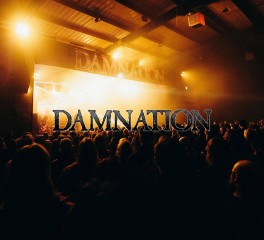
At a personal note, the road to discover the greatest depths of Cult Of Luna’s music has been as rewarding as conversations with Johannes are. Always with a dash of humor and many more pounds of honesty, he will agree and disagree with you with respect to your opinion and wit, always very steady to his own opinion and clear on his beliefs. Between outtakes of having their first UK show at the same festival with The Berserker, something that will happen again now in the upcoming Damnation festival, to a dive into what he listens now (that you will read in our monthly column), below you’ll find all of Cult Of Luna’s current creative process leading to the amazing "In The Shadow Of Your Shadow" for which you can also read a review here.
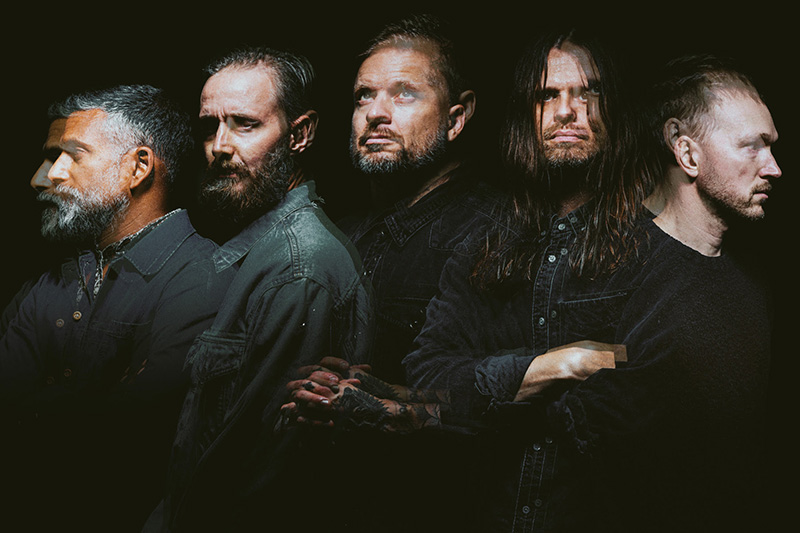
Hello and welcome. I'm from Rocking GR in Greece. How are you, Johannes? How have things been lately?
Busy. I have a lot on my plate to do and keep track of, on top of the daily responsibilities that come with having kids, for example.
I've been following you and Cult of Luna closely over the past few months, as I've happened to cross paths with you a lot. For the record, I'm the person from Greece you met at Arctangent.
Oh, yes!
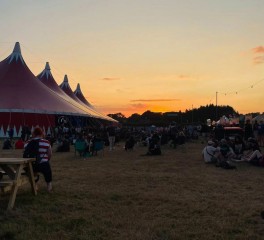
I'll start there: you've been touring heavily with Cult of Luna recently. The last time I saw you was at the Arctangent Festival in the UK, playing "Mariner" with Julie Christmas again-a truly monumental set. How does it feel to revisit that album live?
I enjoyed it quite a lot. You never know how things will turn out when you decide to do them, but I've played with Julie a lot, and any opportunity to work with her is fantastic. I knew that part would be great. The show itself was also interesting because we so rarely perform it. It's hard to put into words, but it felt different, including the way the audience reacted. When I say different, I don't mean better or worse-just different.
From the audience, it felt more emotional compared with the more aggressive feelings Cult of Luna usually express. It was very cathartic, and a lovely goodbye, as Arctangent will be changing locations next year.
Yes, that's true. I didn't have that in mind when we played.
We also saw you doing a very interesting live podcast with Julie Christmas and James and Gavin from Two Promoters One Pod. You don't usually come across as quite so approachable and funny; when playing music, you seem more serious.
Me? I know.
What was the experience of doing a live podcast like?
I'm used to speaking in front of people, so it didn't feel very different or particularly unusual. At that festival, it feels like home. Everyone in the crowd is nice. It's a very cheesy thing to say, but it feels like a family!
The people who go to smaller music festivals are music lovers; they're there for the music
It may sound cheesy, but having been there, I understand how it differs from other festival crowds.
I don't think you could do something like that at a bigger festival. Size matters: it's quite small compared with other festivals. It's the same with Roadburn. The people who go there are music lovers; they're there for the music. The same applies to that festival, Damnation and these smaller, more niche festivals. You're simply doing an interview in front of a lot of people. It's not particularly unusual; I've done it before.
And the audience knows what you do. Speaking of Roadburn, seeing you there this year was a highlight for me. You gave two performances: one focusing on your more recent material and one on the earlier songs. I vividly remember the beautifully constructed light show for the early set. You also dug deep into the catalogue, playing "The Sacrifice" live for the first time, for example. How did you decide to go that far back?
That was part of the idea of playing older material. If you're going to play old songs, you might as well play old songs, right? Going that far back limits you somewhat, because those songs are very different from what we do today. They were also written with another vocalist in mind. It was a balance between songs we'd enjoy playing and songs we could still do justice to. We think "The Sacrifice" is one of the songs from that album that still holds up.
It makes sense alongside what you do now.
Exactly. One thing I really enjoy about that song is that one of its riffs was among the first we ever wrote for this band. It helped create that feeling of coming full circle.
To round off this year's festivals before moving on, you're about to play Damnation Festival, where we hope to see you again. Is anything special planned for that show? Will we hear some of the new album?
I don't know.
You're not sure?
No, we haven't decided on the songs yet. The challenge with a show like that, especially when you have new songs coming, is working out which songs work in the studio and which work live. At the beginning of a run of shows, you always make mistakes. You try songs and realize they may not be as good live as they are on record. There's a risk that we'll play songs we'll never play again because they don't work live. We'll see; we haven't decided on the set yet.
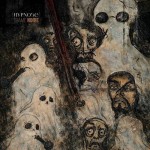
It will be a surprise for all of us, then. I'm sure it will be a good one, because the new record is excellent. It's always a pleasure to hear a great new album from a band I love. Let's start from the outside and work our way in. "In the Shadow of Your Shadow" is coming out in approximately a month, on 6th November, and I've had the chance to hear it. The cover vaguely reminds me of the film Vertigo. Who created it, and what made you choose it?
We've worked with the same person since 2004: Erik Ulofsson. He was in the band until Vertigo, and since then he's worked on the artwork.
How do you feel the artwork connects with the title? It deals a lot with darkness, which we will discuss. What does the spiral signify in relation to the darkest parts of ourselves?
What do you think?
You don't want to define it for other people.
I think this is the wrong time and place. When you create a piece of art like this, I mean the whole package: the music, visuals, artwork and lyrics. Everything is part of a whole. The danger with these interviews before the album is released, is giving everything away. I know, from start to finish, what the lyrics are about and how the theme connects to the artwork. How much fun is it for me to tell you all of that? We can talk about it in a few months, but I think revealing everything takes away some of the magic.
I've never spent more time on vocals. I probably spent more time recording vocals for this album than for all the other albums combined
I respect that, so let's take another direction. From what I've read and understood, the album's central theme involves going deeper in circles and reaching difficult depths: confronting parts of ourselves we thought we'd overcome, and toxicity we thought we'd left behind. In times like these, I think it's important to be brave enough to face those things. Musically, you've brought in many new elements while retaining your identity. The title track, "In The Shadow Of Your Shadow", and "Grey to Black" sound like robust, recognizable Cult of Luna. However, your voice sounds angrier and your growls grittier. Was that something you deliberately worked on, or did it develop with experience and age?
I've never spent more time on vocals. I probably spent more time recording vocals for this album than for all the other albums combined.
Perhaps that's an exaggeration, but I don't think it's far off. Technology makes a difference, for better and worse. When we recorded "A Dawn to Fear" in Norway, we had ten days in the studio and had to finish within that time. I wouldn't say we were rushing, but we had that deadline. Recording in Umea, where I have my own studio, means I can do 1,000 takes if I want. I can correct every small error or change anything I want to: and I did. I spent a lot of time on the vocals, redoing them so often that I don't even want to know how many times.
It's good that the work is being noticed.
I'm not saying it's good or bad, just that it's a completely different approach to what we do.
One mistake is to assume that everything is intentional
I could also hear that grittier vocal sound live, so it's interesting to know how much you've worked on it. Staying with the songs already released, "The Rift" is one of the album's most surprising tracks. It has a hardcore punk approach and fast, almost death-metal guitars - something you haven't done for a long time. What took you in that direction? A need for change, or for faster sounds?
One mistake is to assume that everything is intentional. Sometimes you simply write a fast song. I was trying to think of another song to compare it with: "Silent Man", for example, is fairly fast, though not as fast as this one. I don't remember ever thinking, "Let's write a fast song." It becomes what it needs to be. What matters more to me is the emotional connection. Even if it's faster than usual, it needs to retain Cult of Luna's essence. Why is it fast? Because it needed to be. I don't think we reflected on it that much. Something funny happened, though. I looked at the YouTube comments and received some personal messages. Someone wrote "Cult of Mastodon" because they thought it sounded like Mastodon. Someone else thought it sounded like early Killing Joke, and another person said Breach. One comment mentioned a Russian Circles vibe during the uptempo section; another said it sounded like Dave Grohl was drumming for us. It's interesting to see all those different comparisons.
To me, it vaguely recalls Neurosis in their "Enemy of the Sun" era, at the point when they were moving away from hardcore.
How is that possible? I'm not questioning you; it's a matter of taste. But isn't it funny? Those bands are mutually exclusive in that they don't sound anything like each other, yet that's what people hear. You mentioned Neurosis - which album? Enemy of the Sun?
Yes.
I can't hear that myself, but I'm not questioning you. That's just how it sounds to me.
It's interesting to hear those comparisons.
Isn't it? It connects to the earlier question about interpretation. I'm not saying any of those opinions are wrong; anyone can have them. But those comparisons are mutually exclusive-the bands don't sound alike.
People tend to connect things with what they're more familiar with as a feeling, not necessarily because the music sounds similiar.
Exactly. That brings us back to interpretation and how we see things through our own eyes. I don't know what else to say: it was simply a song we wrote.
We've always tried to expand the band's musical output
It came naturally, then. Something that does seem intentional is your collaborative approach. This time, the new album features Joe Duplantier from Gojira and David Eugene Edwards, known for 16 Horsepower and many other projects. Why did you choose those two artists for these songs, and how did you begin working with them? I can hear why they fit, but how did the collaborations come about?
We've been doing this for a very long time, and we've worked with other artists since the first album, even before it, when we'd only released a couple of singles. We've always tried to expand the band's musical output. I think one of those early recordings featured a didgeridoo and a cello, and the first album had three different vocalists contributing. Expanding our sound has always been the intention. The difference now is that we're in a position to ask artists we admire, and they'll take notice and want to work with us.
I see.
I've been a huge fan of David Eugene Edwards for at least 25 years, perhaps, not quite 30, but certainly 25.
Did you know that 16 Horsepower would reunite to play live while you were recording?
I think he told me during the recording process. I had tickets for the Stockholm show, but I couldn't go, which was frustrating. I don't live in Stockholm. I love 16 Horsepower. You can't play me a song of theirs that I don't know. I love them, so that was amazing. It was a little different with "One More Day": we knew that song desperately needed someone else to contribute.
When you work with someone, you need to give them both freedom and direction. Giving someone complete freedom isn't always helpful
He almost sounds like a guiding spirit, entering the song and giving it his own direction.
When we asked him, we had a great conversation, and I explained what the song was about. Then came the usual discussion: "Do you want to write the lyrics, or should I? Here are some suggestions." When you work with someone, you need to give them both freedom and direction. Giving someone complete freedom isn't always helpful. The same applies to Joe. I've done a lot of guest work myself when I've had more time, and you need someone to tell you what they're looking for.
A place to start and some boundaries, rather than having every possibility open.
Yes, something to work from. But I always say, 'If you get a feeling for something, follow it.' We started by saying, 'We have these two parts, and this is what we're thinking: but you can do whatever you want.' When David sent the song back, he'd done an amazing job and made it his own. He practically stole the song from us, which I loved. You've heard it; I love it. With Joe, it came from a different starting point. I've known him for a long time, and we'd always wanted to do something together. We began with that intention, and this song worked perfectly. We gave him an idea of where we thought his vocals could go, but he was free to put them wherever he wanted.
Your vocals work so well together. Your voices complement each other beautifully.
He has a very special voice.
There's no reason for us to have a record label anymore
You mentioned having the freedom to spend so much time on vocals because you could work at your own pace in your own city. That connects to something I wanted to ask about Red Crk, your label, which releases mainly your projects and a few selected works. What led you to take that route?
There's no reason for us to have a record label anymore. I don't currently see an advantage in working with someone else. That's not to say there couldn't be one, but right now it makes sense to do it ourselves.
Is that because the internet makes it easier to reach people, as well as the size the band has reached?
To be honest, for perhaps the last ten or fifteen years, I've hardly noticed being on a label. We haven't felt pressure. That was much earlier, when you did feel pressure… To be honest, financially it's much better to do it this way. The world is changing, and not for the better for musicians.
I'd like to touch on that briefly, but first: the label mainly releases your projects, the band's work, your collaborations and Julie Christmas's latest albums. That makes sense, given how well you work together. What led you to release "Gris Klein" by Birds in Row? I love that album, and it's one of the few releases by Red Crk outside your own projects.
We'd played with them before, which was the starting point. Alexis, our manager, who also handles much of the label's day-to-day work, suggested it. We hadn't decided how much we'd do beyond our own releases, or how much work we could take on. But Birds in Row had an album ready, and we had the financial means to release it. You said you love the album; I do too. There wasn't much more thought to it: we could do it, they wanted us to do it, so let's do it.
We've touched on how difficult these times are. One theme that stands out to me in the notes for your latest album is the importance of finding like-minded people and building a community. I'd like to explore that in two ways. How do you find community through Cult of Luna and playing music as an outlet? And do you think the community around heavier music is growing? Metal and hardcore seem to have gained wider acceptance and larger audiences in recent years. What has your experience been?
I don't know whether there is one single community. I'm not disputing you; you may be completely right. I live in a town in northern Sweden that used to have a huge hardcore scene, which you know about. There's certainly still a music scene here, but it's more a community where everyone knows each other, with lots of new kids playing, at least in my experience. When we play shows, we fly to Europe or the US and meet people who belong to a community that doesn't really exist where I live. We only meet them when we play, which is very rarely. I hope you're right about it growing. One amazing thing about this audience is its loyalty. I imagine that in a more mainstream pop band, you might always fear losing relevance: 'Am I playing the right music?' Of course, metal audiences won't necessarily love every album or everything you do, but they're faithful. They'll come back, see you live and won't forget about you. Some mainstream bands have one huge record and then disappear with the next. In metal, across different levels, even bigger bands that haven't released anything relevant for almost thirty years can still tour and draw an audience.
Yes, absolutely.
For example for classic metal bands, like AC/DC, nobody wants to hear songs released after 1992. That's amazing. I'm not saying that's bad: every band should play for as long as they want. The same goes for us. I'm very thankful that people buy merchandise and support us, even though we're not at that band's level.
Maybe you will be. Who knows?
Oh, yes. People do support us. We come from underground music, and I think people appreciate that.
You will be soon touring with Bruit and Youth Code entering 2027. How did you decide on inviting them to play with you?
They are both a couple of very amazing bands and we are actually looking forward to play with them.
You have a lot of things going on right now but are there any future plans? Possibly any new collaborations?
We tend to do things as they come. We are open to new ideas but we still have a lot of things planned for the immediate months!
Is Greece happening again soon for you? You haven’t played here since 2022!
Really? I mean you shouldn’t complain, we haven’t played in Sweden outside festivals for a long time! Seriously we would love that but there is nothing clear I can tell you, for sure we haven’t played headline show in our home country for a while so, who knows!
Ok, see you in Damnation then for now! Last but not least, say anything that you’d like to close off the interview and towards our readers!
Be kind to each other, and log out of the internet!