









Gorod: "Technicality is just a tool to serve groove, melody, and emotion"
The french tech-death band on the impact of Gojira’s performance at the Olympics, "climate anxiety," and the ambiguous promise of artificial intelligence.
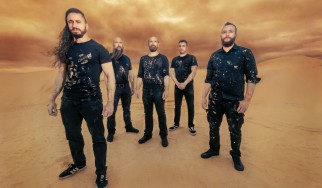
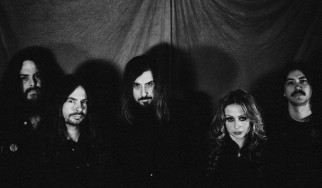
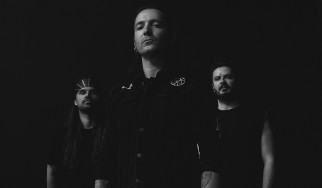
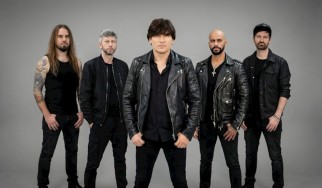
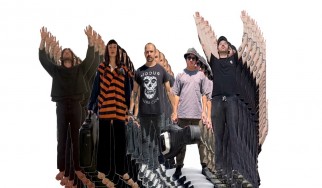
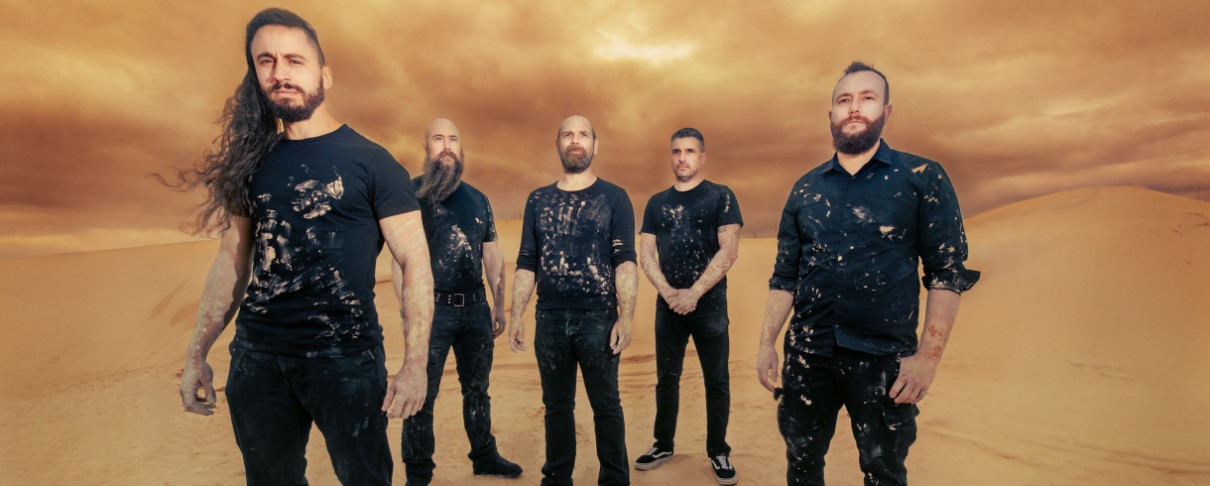
Gorod have been flying the flag for France in the world championship of technical death metal for two decades now. From their debut, they showed a spark of constant evolution - yet few could have predicted the result that is "The Ember Gone", an album that lets technicality serve groove and emotion, opening the door to jazz and African influences, with hidden details scattered throughout the compositions waiting to be discovered. On the occasion of their excellent new album, we found the chance to sit down for a fairly revealing interview with bassist Benoit "Barby" Claus and vocalist Julien "Nutz" Deyres, talking jazz and African influences, the fire that sparked the album's concept, their new, more progressive approach, and their thoughts on AI. Read on for what they told us.
Hello, my name is Alkis, and I'm from Rocking.gr. First of all, congratulations on your latest album! I can't believe this is actually the first time Gorod has been featured on Rocking.gr. It took a while!
Nutz: Hi Alkis! Thank you so much, it's a real pleasure to get featured over here!
You've been around for more than two decades, yet listening to "The Ember Gone", the material sounds remarkably fresh and modern. After so many years, how do you manage to keep Gorod's sound both unique and, perhaps more importantly, still evolving? Do you consciously try to avoid repeating yourselves?
N: I think it comes down to two main things: our usual composition process and our refusal to repeat ourselves. We just keep following the same recipe since the beginning: Mathieu, our main composer, doesn't really listen to metal and remains faithful with his classic influences. He gets his inspiration from completely different stuff: Latin jazz, 70s progressive rock like King Crimson, Al Di Meola, John McLaughlin, and for "The Ember Gone", he wanted to get into African rhythms and grooves. Since he always composes by building the drum patterns and grooves first before adding the guitar layers, it naturally creates something that sounds like… Mat’s art, haha! We’re been following the same way of making music for a while but we're always eager to challenge ourselves and have fun playing together.
With time and "maturity", we learned how to let the tracks breathe and let the emotion dictate the delivery"
Your approach on "The Ember Gone" seems more progressive and melodic, while the technical side of Gorod is still very much present. At the same time, the more aggressive death-metal element feels somewhat more subtle than on some of your earlier records. I also really enjoy the use of clean vocals on the album. Was this a conscious decision to give the melodies, atmosphere and vocals more space?
N: Everything developed quite naturally. Back in the early days, we used to pack twenty technical ideas into every single minute. With time and "maturity", we learned how to let the tracks breathe and let the emotion dictate the delivery. When I wrote the lyrics for a song like "Forgiveness," which deals with the intimate guilt of a father facing a ruined world, the vocal approach had to be raw and emotional. The balance between growls and clean vocals came out from a section that demands air and melody to carry the story. In the end, we just follow the song's render.
So would you say that "The Ember Gone" wasn't written exclusively with technical or death-metal fans in mind, but rather for anyone who enjoys forward-thinking, adventurous metal? Do you feel the album could potentially reach listeners who wouldn't normally listen to technical death metal?
N: Yep! We’ve never wanted to fit a 100% pure tech-death checklist. For us, technicality is just a tool to serve groove, melody, and emotion. On this record, we have very technical and twisted tracks like "Regret," but also epic progressive pieces like "Remains" and heavy atmospheric rhythmic explorations. Anyone who loves adventurous, organic, and atmospheric music can find a gateway into "The Ember Gone". Hopefully, at least.
On the final track, "Remains," there's a subtle double nod to old jazz standards: Django Reinhardt’s rendition of "After You've Gone" and Charles Trenet’s "Que reste-t-il de nos amours..."
Could you give us some insights into "The Ember Gone" that might not be obvious to the listener at first? What are some details, influences or little elements hidden in the album that you would like people to pay particular attention to?
N: There are plenty of hidden things! Musically, listen closely to the drum patterns: you will get some unexpected Latin and African grooves. On "Crimson," we invited our long-time friend P.Y. Marani to lay down some cool guitar solos. Our goal was to put out something quite refreshing by avoiding creating another death metal album. We definitely got out of bounds this time. We actually focused more than usual into our progressive touch with trying to keep our signature. I guess that the more you listen to it, the more you’ll recognize our previous eras, but the first listen may be quite surprising, hehe! Lyrically, "Regret" is packed with inside jokes and references that only the five of us understand. And on the final track, "Remains," there's a subtle double nod to old jazz standards: Django Reinhardt’s rendition of "After You've Gone" and Charles Trenet’s "Que reste-t-il de nos amours...".
"Signs" opens the album with a very atmospheric introduction. Do horror films and film soundtracks inspire you when you write music? When I listen to "Signs", I get a little bit of the same unsettling atmosphere as Mike Oldfield's "Tubular Bells", which of course is strongly associated with The Exorcist. Was that kind of cinematic atmosphere intentional at all? And I also hear a little bit of Opeth in there - especially in the way the song moves between heavy and more atmospheric/progressive passages. Was Opeth ever an influence on you?
N: That cinematic has turned out to be quite intentional! "Signs" sets a dark, apocalyptic tone inspired by smoldering peat fires, fires that burn silently underground and suddenly burst out of nowhere. It represents the moment around our campfire where we admit that tonight is the end of the world. Opeth is obviously a legendary band that mastered the art of balancing extreme heavy passages with deep acoustic/progressive landscapes, so having that comparison is a great compliment! Thanks.
The album seems to draw on a much wider musical vocabulary than traditional extreme metal. Are there any non-metal artists or genres that you were listening to while writing "The Ember Gone" that might surprise Gorod fans?
N: As I mentioned, Mathieu draws heavily from 70s progressive rock (King Crimson), but also guitar masters like Jason Baker, Marty Friedman, Guthrie Govan… but also crazy stuff like Panzerballett, and a lot of Latin jazz. For this record, traditional African percussion and rhythmic structures were definitely a bigger inspiration. Personally, I grew up with extreme music like Grind Core and Math/Noise Core, extreme Death Metal mingling with jazz standards and a lot of Classical Music like Stravinsky, Shostakovitch, Richard Strauss, Wagner and Prokofiev, which found their way into the actual tragedy of the overall concept.
"Forgiveness" has been described as your most progressive composition to date. What made this particular song push you further into that territory? Was there a point during the writing process when you realised, "Okay, this is something Gorod hasn't really done before"?
N: "Forgiveness" was a turning point. As the music developed into this epic, sprawling structure, we realized it needed room to tell a deeply personal narrative. It handles the "Pyrocene" topic through the eyes of a father crushed by guilt over the world of ashes he's leaving to his children. The emotional weight pushed us to blend our technicality with a brand new form of narrative. It felt so cinematic that Sébastien Duattis (director, film maker) actually created an 8-minute short film for it including all 5 of us performing our own role!
The album also has a strong cinematic and atmospheric quality. When you're composing, do you actually imagine scenes, images or landscapes in your head?
N: The music always comes first. Mathieu builds the rhythmic and harmonic frame, and once we listen to the tracks, the visual imagery and concept start to form. For "The Ember Gone", the visual imagery was born right in our backyard: the five of us sitting around a campfire in our drummer Karol's garden, talking about the world burning down around us. From that real image, the narrative landscapes from the peat fires in "Signs" to the ash-covered world in "Remains" came to life quite naturally.
The concept behind "The Ember Gone" deals with megafires, environmental collapse, consumerism and existential anxiety. Why did you choose such a contemporary and very real subject for this album? Does writing about something happening in the world around you change the way you approach the music compared with more abstract or philosophical subjects?
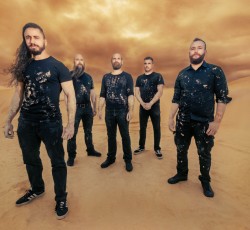
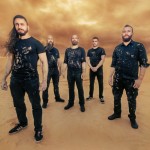
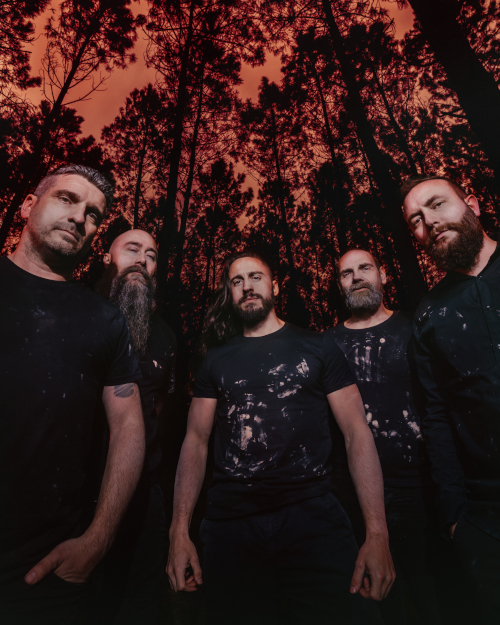
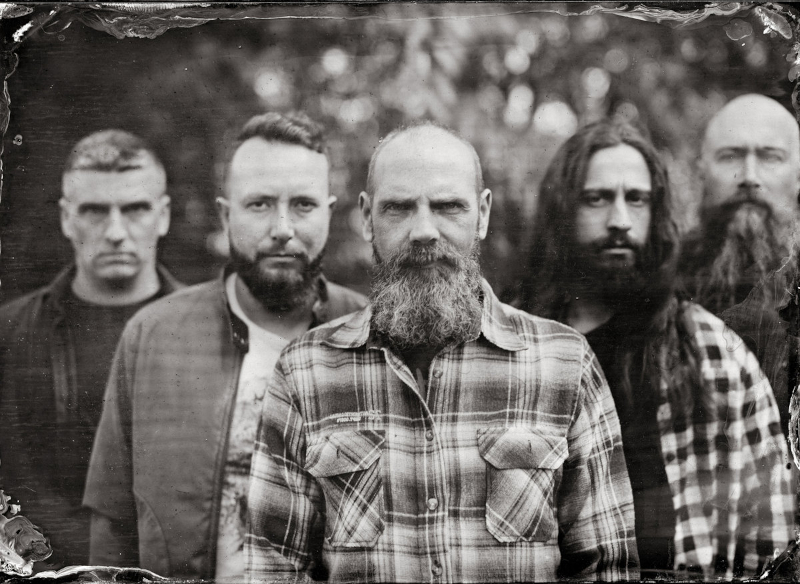
N: It came from a very real, local experience. During the writing period, massive megafires hit our region in Gironde (right where we took our promo photos) and the Corbières. Moving from abstract themes to something so raw and incarnated definitely changed the vocal approach. But we didn't want to make a preachy or moralistic lesson. We framed it as an intimate conversation between five friends over a single night around a fire, using the myth of Prometheus to reflect on human hubris.
Gorod is often associated with extremely technical playing, yet the music also has a very strong sense of groove and melody. Is technicality ever something you deliberately have to hold back in favour of the song?
Barby : Mat (Pascal, guitar and founder) has never viewed technique as an end in itself; he truly uses it as a tool to create music. On the other hand, he’s always loved the technical aspect of music, and it’s this dichotomy that makes Gorod’s music so recognizable.
We just sometimes tone down the instrumental parts during certain vocal passages so that the vocals aren’t drowned out by an avalanche of notes (though… hehe), but that’s part of the overall composition process.
You often talk about not wanting to repeat yourselves. At what point does the desire to evolve become a problem? Do you ever have to tell yourselves, "This is too far from Gorod - we need to bring it back"?
B: No, we’ve never had that problem! We-or rather, Mat-decide on a direction to take, such as a more progressive sound for "The Ember Gone » or a catchier sound on "Æthra", and then he writes the music! He has a real knack for avoiding repetition and coming up with new ideas while staying true to Gorod’s DNA.
I imagine that during his songwriting process, he discards a few ideas, and his hard drive must be teeming with great riffs for other projects!
What is the one musical idea you've had that was simply too far outside Gorod to actually use?
B: Only Mat can answer this one !
Before Gorod, the band was known as Gorgasm. Is there any chance we might see the old Gorgasm name resurrected at some point - perhaps for a special show or a few old-school gigs - while Gorod continues as usual? Would you ever be tempted to revisit that era live?
B : No chance ! On one side because the US Gorgasm still exist and on the other side we use Gorod since the first album (even a first version has been released under the Gorgasm name).
What holds this group together is friendship, and we’ve always stuck together through thick and thin"
The five of you have been together for more than a decade now. How difficult - or perhaps how easy - is it to maintain such a long-running lineup? Does spending so much time together, especially on tour, ever create tensions, or have you reached the point where you know exactly how to deal with each other's personalities and quirks?
B: Yeah ! More than 12 years now !
We’re very proud to have kept the same lineup all these years (a lineup that also includes our sound and lighting technicians)! It hasn’t always been easy, that’s for sure, but what holds this group together is friendship, and we’ve always stuck together through thick and thin-there’s no other secret to it. That’s life: you might mess up sometimes, but your friends are there to support you… or put you in your place!
Your name, Gorod, is a Russian word meaning "city". Given the current political climate and the boycott of some forms of Russian art and culture in many countries, have you ever experienced any confusion or negative reactions because of the name? Has the Russian origin of "Gorod" ever become something you felt you needed to explain or distance yourselves from, despite the name having nothing to do with Russia politically?
B: I think there was one disparaging remark at the start of the conflict in Ukraine, but not much else.
Gorod has never conveyed a political message, so there’s no cause for concern on that front.
Boycotting art for political reasons (unless the artist is politically active in a way you disagree with) isn’t necessarily the answer, since artists are often very critical of the ruling powers.
Your lyrics have touched on philosophical, social and environmental issues, particularly on "The Ember Gone". Do you see music as a way of expressing political or social ideas, or do you prefer to leave those interpretations to the listener?
N: We are not a preachy or partisan political band. "The Ember Gone" touches on real-world crises, megafires, climate inertia, but it approaches them through mythology (Prometheus), personal emotion, and open philosophical questions. I prefer to present a striking story or a raw human feeling and leave the interpretation open to the listener rather than lecturing people.
Nobody said anything to painters when the airbrush came along, or to musicians when the first electric guitar arrived!"
AI is a topic I ask almost every band and artist these days, and almost 99% of the answers I get are strongly negative. I understand many of the concerns, especially when it comes to originality, copyright and the way artists make a living. At the same time, I have the feeling that AI will inevitably affect every creative field to some extent. Do you see any ways in which it could actually be beneficial to art or to the artist - perhaps as a creative tool, rather than as a replacement for human creativity?
B: This is a very complex issue that really divides people.
It’s a very new technology-still in its infancy, you might say-and therefore immature. Its applications will be endless and are already beginning to turn our world upside down.
When it comes to the creative field, it’s inevitably very ambiguous. All you have to do is type three sentences to get a novel, a song, a painting, or a cinematic sequence-and anyone who does that is, of course, a fraud. But if you use it as a tool to create, to help you along, why not? Nobody said anything to painters when the airbrush came along, or to musicians when the first electric guitar arrived!
In medicine, AI will enable breathtaking advances. Just yesterday I heard on the radio that a Stanford lab created a virus that targets antibiotic-resistant bacteria-it’s just crazy-and at the same time, the AI that made this possible is freely available because researchers hope that other researchers will make further discoveries. When you’re a fan of sci-fi and dystopian novels, the connection to disasters is quickly made-I guarantee it!
Not to mention that the environmental impact of AI is nothing short of a disaster; we absolutely must take a comprehensive approach to the issue, or humanity will face a devastating catastrophe.
Recently, Gojira made history by performing at the opening ceremony of the Paris Olympics, bringing extreme metal to an audience of hundreds of millions of people. Do you see Gorod ever reaching that kind of level of exposure? And if you were offered an opportunity to perform on such a huge international stage, what kind of song or performance would you choose to represent Gorod?
B: We’re very proud of Gojira and the visibility they bring to the metal scene in general, and in France in particular. We’re way behind our European neighbors; metal music in France is still viewed by the media and mainstream cultural institutions as a degenerate subgenre, and that image-fortunately-is changing, thanks in large part to Gojira.
We’re a long way from that level of fame, and I think it will remain out of reach for us.
When you have an opportunity like this, keep in mind that there’s a music director who will have the final say on the song selection.
You've been touring for more than two decades, but as far as I know, Gorod has never played in Greece. How is that possible?! When are you finally coming over?
N: That is something we’re definitely missing. We honestly don't know why it hasn't happened yet because we would love to play in Greece, and we’re really into heritage, culture and historic background and the land can be considered as the cradle of our Culture. Promoters over here, if you're reading this: bring us over, we are ready to bring the fire and drink some Tsipouro with you!
After eight albums and more than two decades, what still excites you about being in Gorod? What is the next thing you would like to achieve that you haven't done yet?
B We’re a group of friends who love playing music together, having a few drinks, and sharing good times-the simple things in life, basically! So as long as we can keep going, we’ll keep going!
There are plenty of places we haven’t played yet, new people and cultures to meet, and just hanging out on an island-we’ve got no shortage of goals!
Thank you very much for your time.
Thanks a lot for your questions and we really hope to play in Greece !!