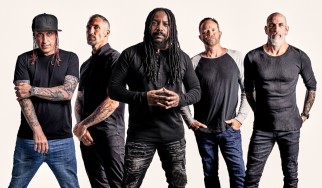

















Sevendust: "Τo the point where we're playing in crab shacks and taco stands"
Drummer Morgan Rose talks about the new album "One", the struggles they went through and their return to Europe
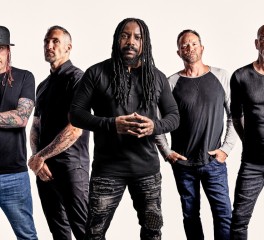
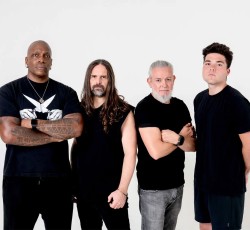
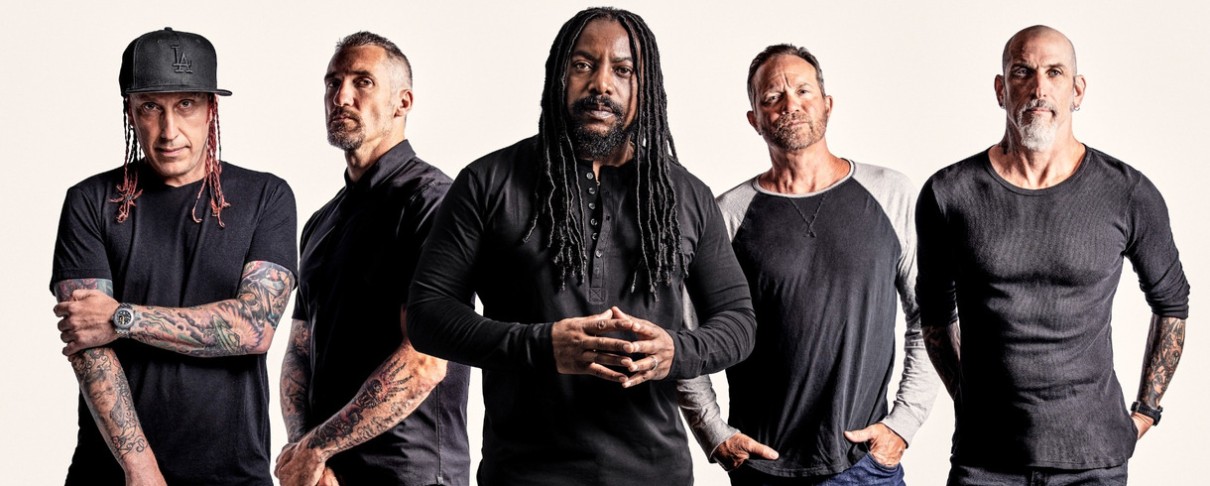
More than three decades after forming, Sevendust are back with "One", an album born out of a decision to let go: write without rules, without overthinking, and without worrying about what the band is supposed to sound like. With the record out and their return to Europe on the horizon, we sat down with drummer Morgan Rose to talk about working with Elvis Baskette, the years when mismanagement pushed the band close to the end, and the unexpected revival they're living now, sharing stages with Creed and Alter Bridge. A conversation about survival, brotherhood, and how a band that once considered calling it quits found its way back.

Hello Morgan! We’re catching up while the album cycle is in full throttle for you, so how has the reception been so far, and how do you experience this, still standing strong 14 records in your career?
Great to see you mate, i’m really good and the reception has been great so far, so we’re really excited about this new cycle.
What was your intention, going in to write this record? Did you have a specific goal in terms of direction, sound and general approach?
I think we've put a lot of pressure on ourselves over the years , overthinking it, maybe. Like, "Let's go this direction," "Let's try to make this one heavier," "Let's bring programming in and kind of make that the focus." And, you know, bringing that into the fold — "Let's make this one like this." When you've got a bunch of different people that are writing and you're trying to get everybody to get in the same, you know, the same car, somebody might not really be in that mode. Somebody might be like, "I don't really want to write that kind of stuff right now. What I'm feeling and what is inspiring me is something totally different." So I think we were just like, "You know what, just write whatever you want to write. We've got 14 records. If it comes out like shit that's all right, people can listen to 14 other records."
At the time, I think at least some of us were thinking that this could possibly be the last one. And so it was like, "Let's not put any rules in play here. Let's just write what we want to write." I think by doing that, it took some pressure off and let us be a little more free in our writing. I really love the record. I didn't even know what the hell we had done, to be honest. It was just like, the record was done, we didn't have any rough mixes, so I had forgotten we'd written some of those songs. The response has been amazing.
You know what, just write whatever you want to write. We've got 14 records. If it comes out like shit that's all right, people can listen to 14 other records.
What drove you to title the album "One"?. Does it have a special meaning , maybe a back-to-basics mentality? Does it have any significance of sorts?
Yeah, definitely. You know, like anybody else — I mean, we've been together for a long time, so it's a brotherhood. And, you know, it hasn't always been easy. Somehow we had found our way into this place where we were all just super compassionate and caring for each other. And it's like, "Wow, man. We've known each other for a really long time. We've spent the majority of our lives together," and we care about each other more right now, I think, than we ever did.
So it was kind of like, between that and the relationship we have with the people that have allowed us to do this for this long — it had that "one for all" and that camaraderie type of feel to it. I think Clint came in with the title, and I've never been one that really gets too amped up about any of that. But it made a lot of sense, and it is where we're at right now. We're probably in the healthiest place, as a band, that we've ever been.
You mentioned before that you considered this could be your last record. I believe in other interviews you've also said that as a band you considered throwing in the towel, calling it a day, or taking a hiatus. Considering this - and also the fact that recently you've been touring with bands like Alter Bridge and Creed - do you see that maybe the timing is right, that for bands like you there's a new wave of public interest in that sort of sound? Do you see it getting a bit more mainstream again? What's your feeling on this?
Yeah, definitely. I mean, the wild thing is that luck has not really ever been on this band's side. We call it Sevendust Law, because it seems like we're the type of band that'll go into a town that's had 80° weather with the sun out, everything perfect for three years, and we walk in and there's a fucking typhoon the day we get there. That's like the way it works for us.
The idea behind, quote unquote, "hanging it up" — people don't really understand that we basically toured ourselves into the ground because we had people in charge that were basically slave-driving us. It was: go out there, make minimal money, tour nonstop, to where we were literally getting fewer people to come to shows because we couldn't afford to leave North America, and we were overplaying North America.
So it was like, "This is going to fall apart. This is going to get to the point where we're playing in, you know, crab shacks and taco stands if we don't watch it." We didn't have enough places to play. And it was like, "Let's just go out and say goodbye, and be able to do it properly, leave before they tell us to leave."
And then everything kind of changed. It was like, "Or you could go ahead and go to Europe with Alterbridge." And we're like, "Well, let's do that." And they're like, "And we can have you do a bunch of shows with Creed and possibly leave the United States with them." We're looking at each other - "Yeah, let's do that too." And, "You do have a foothold in Australia, so there's a territory." "Yep, let's do that."
And it was like, "So wait a minute! What we're going to do is everything now. Instead of almost isolating ourselves to North America and burning the market out, we're going to open up the world." And then at the same time, the style of music we've been playing for a really long time kind of turned the clock back around, and all of a sudden we looked at the numbers and we're like, "Oh, damn." And then we had a few videos go viral from songs that were written in 1999, and we're like, "This is crazy."
We're playing shows here in the States, and I mean, Lajon's walking up after the show like, "Something's happening, man. Something is happening here." And Clint's like, everybody's like, "What the hell just happened?" And then I thought about it to myself the other day, what if we would have said we're going to go ahead and retire? What if we would have actually done that? It would have been really par for the course for Sevendust. It would have been like, "Well, the world wants to see you now, and now you're going to leave." And then we would have gone out and been like, "Well, hold on! Everybody likes us again, so we're going to not retire now." So it was just like, for once, the decision to not do something ended up working in our favor.
For once, the decision to not do something ended up working in our favor.
Maybe this is karma, like your song. Maybe now it's time for the universe to pay you back for all the bad luck you mentioned.
I mean, you know, we have to take accountability for allowing certain people to get their grips on us. But damn, we're a bunch of southern guys that just had faith in humanity, and it's not a really good occupation to jump into if you're going to start by trusting everybody. That's for sure.
Going back to the album, you once again worked with Elvis Baskette for the record, and the production style continues to amplify your sound. Were there any specific goals in terms of how you wanted the album to sound? And if I may add a personal observation, your drums always sound really powerful, but also sound like real drums, in a modern day where everything is super processed. I'm really wondering how you approach it from a creative standpoint.
Well, first about Elvis. This was a great record for us working with him, because that was another thing that changed. There was this micromanaging happening, and I was a part of that. And it was obviously not fair to the rest of the guys. I mean, you'd kind of be in a panic. Things aren't happening the way they should, and the people who had been in charge had done so many horrible things to us that it's like, "I'll just go ahead and be a paranoid psychopath and keep my head in every door that's going on." So it just built a bunch of paranoid people.
We had to look at our manager and be like, "I don't want to be naive, but I think this guy's an honest guy." We looked at what he had done, we looked at the opportunities he'd had to do dark things, and I was like, personally, "I'm going to stop messing with everybody and let them do their job and back off. I'll have an opinion, I want to have an opinion, but I'm not going to try to get in everybody's business."
And Elvis was part of that whole situation. We micromanaged Elvis for, you know, two or three records. And then it was like, "You know what, this guy's got a lot of plaques on his wall. Maybe we should just kind of let him do what he does and leave everybody alone." I mean, he'd be in there writing with LJ, and they would come back and we'd be like, "I don't know, man." You know, like, leave them be. Let them do what they want to do. I'm no expert. I'm just another guy trying to put my piece in there.
So yeah, that was really cool. Working with him and not feeling like... it was a lot less work. Minding your own business can be very relaxing.
Drum-wise, those guys are terrorists. It's hard work in there with them. They don't like to move things around. They're looking at velocity on drums. If there's going to be a little nudge somewhere on something, they're okay with that. But forget about Beat Detective. Forget about putting it on the grid. That's kind of how they are with everything, with vocals, with guitars. It's like, in this day and age you could probably get away with a ton that they won't allow you to get away with. So there are frustrating days where it's like, "Can't you just let me be like everybody else and just hit this shit three or four times and put it where it needs to go?" And then there are other days where it's kind of rewarding, when you're done and you go, "Well, what you hear is kind of what it was. That's what I did."
What you hear is kind of what it was. That's what I did.
Does that also make you think harder or filter your parts more as you're going through the process? Do you feel like it changes the way you think about all the bits and pieces? Because you're doing quite complex work. It's groovy, but it's always very tricky, very interesting stuff. So I'm really curious how this affects your approach.
That’s a great question. I have no idea what I'm playing, ever, because my hands are usually involved in the writing side, looking more at progressions and vocals. So I can be in a room sitting with John and Lajon, we throw a basic beat in there that we're just using, program it, and then spend all the time making sure the vocals are where we're happy with them, or the progression musically. We'll start writing all that stuff, get it done, and move on to the next song.
And it's happened to a bunch of records in a row where it's like, "Okay, let's do drums." And I'm like, "Cool, I've never played that song, and it's time to record it." And I'm not going to play what was on the grid, not going to play the stuff that was programmed. So give me like two minutes, let me play through this thing once, and then that's kind of how it goes. Which is again, sometimes rewarding, and you hit something special.
If you listen to Tom Petty, he never overthought anything when it came to writing songs. It was just like, if it's not good right away, throw it in the trash. And then you've got other people that'll sit in there and play a chorus 65 different ways, and if they end up going back to the first one, fine, they exhausted every other option. I kind of go the Tom Petty route. And sometimes it works and sometimes it doesn't. And unfortunately, all of them go on the record.
So it's time to relearn some of these to play them live. I did it the other day, we were playing "Unbreakable," and I went back and listened to the record, and it came on and I looked over at somebody and went, "Damn, I'm playing that wrong. I'm playing that whole part wrong." And then another part came and I was like "Oh, I got that." So I guess my drum parts are open for interpretation.

But at the same time, there's a lot of syncopation going on, so it's not exactly a walk in the park. It's really interesting the way this spontaneity comes into the record. And you mentioned "Unbreakable," which I think feels like an instant live staple with the huge choru. I was wondering how much you think about crowd reaction at the time you're composing. By now I think you understand what works and what doesn't, or at least you have a feeling. Is there any moment where you can really imagine playing it live and getting that reaction from the crowd?
Another great question. We did that for most of our career, we'd look at each other and go, "Ooh, that heavy middle section's going to go off," or "God, that chorus is giant." And we'd say these things, get so excited to go out and play them, and then we'd play it and the crowd would just be dead. And I'd be like, "Get that song out of the set as fast as you can." I was so uncomfortable playing it. I felt like they were mad at me.
So we again just stopped overthinking it, because honestly any time we wrote something I thought had a big commercial-sounding chorus, I'd be like, "It ain't going to happen. We'll put it on there and see what happens, but I'm telling you right now, it's not going to happen." Even if it does well at radio or streaming, our crowd's just going to look at their watch and wait for the next song.
And on this record, they're not doing that. I mean, how are we playing three new songs on a tour? We haven't done that since probably our third record. We usually just play whatever's getting pushed at streaming, one or two tracks, and let them do what they do, then put them away. If you look at our setlist right now, there are songs from a bunch of records that aren't on there. I know we have 15 records and you can't play 40 songs a night, but we committed to it. We were like, "Let's give it a real shot and see what they think." And all three songs we're playing are getting big responses.
It ain't going to happen. We'll put it on there and see what happens, but I'm telling you right now, it's not going to happen.
That's amazing. And I think you also keep a balance between aggression and mellower moments. Is that balance something you consciously think about at the time of writing, or is it just whatever comes out?
Yeah, it's all winging it. I mean, it's a blessing and a curse. There's something I believe is special about how we feel about each other when we're writing these songs. They're all real songs, written about real experiences. Me and Lajon were writing songs and we were both kind of going through the same feeling, even if it wasn't exactly the same thing, we could relate. It was a hard time for us emotionally. So being able to write something and have each guy look at each other and go, "What about this?" and I'm like, "Yeah, that hits right where I'm at", or me going, "That's great, what if we go from there to this?"
Yeah, it was just therapeutic. It was helpful, we were helping each other, and we were helping ourselves. And then John comes in with "Misdirection" and you're like, "What happened to you, dude? Wow." And then we're like, "You sing that, because that seems super personal." And then Clint has his moment, going in and writing something, and you're like, "Damn, dude. I know what you were going through. This is hardcore."
So yeah, there's no conscious decision about what we're going to do. It's like, whoever says, "Hey man, this almost put me down, what do you think about this?" And you're like, "Okay, yeah, let's get on that." So it can be mellow, it can be heavy.
The blessing and the curse is that we can go out and play shows with Creed and Alter Bridge, Creed more than Alter Nridge for this comparison, and then next week we could be on a bill with Slipknot. And you wouldn't really see Creed and Slipknot playing together. Not in the States. In Europe, yes. UK, yes. But not in the States. And when we go play with Slipknot, we're not quite heavy enough for the Slipknot people. And when we go play with Creed, we're too heavy for the Creed people. So there's been this thing our whole career where we've kind of never really fit in, but we're allowed to come to each party. It's almost like walking in the door at a Slipknot party and them going, "Here they are, man. These guys are kind of weak, but you know, they're harmless." And then you go to a Creed party and they're like, "I think I'm going to go in the other room, those guys are nice, but they scare me." That's what it felt like for the majority of our career.
But at the same time, now that we're seeing a resurgence of heavy bands mixing aggression and melodic elements, many of them mention Sevendust as an influence, especially when it comes to the tight riffing and rhythmical patterns you use. Is there something you've discovered in newer bands where you see elements of Sevendust, after all these years, coming through in different acts? Are there moments where you say, "Okay, this seems like something we did 20 years ago, and now it's becoming huge"
It's wild. I mean, I don't feel like we're old, you know? We're very young at heart. We still try to bring a show that's respectful, and that's probably when we would wrap it up, when we can't do something that would be respectful to the people who've supported us. You're not going to see us up there in wheelchairs trying to pull this off. We're going to go really hard.
With that being said, we've played a bunch of festivals and I've become friends with a lot of heavy bands, newer bands, and they talk about that stuff. And I'm like, I don't fully hear it, but it doesn't really matter, I guess. It's kind of what they might have been listening to when they were growing up, and maybe that influenced them to take something they heard and move from there. I mean, it's no different from what happened to us. We had five guys listening to five different things, and that mixture came up with this.
But yeah, it's super humbling. It makes us feel like we're still relevant, when the bands we're looking at that are blowing up respect us, and we love what they're doing. We don't look at ourselves like pioneers or anybody that special. I think what we're most proud of is survival.
We don't look at ourselves like pioneers or anybody that special. I think what we're most proud of is survival.
And how difficult has it been, especially considering all the changes in the music industry. You started in an era where people were still buying records, before streaming. You've seen the entire industry change. And keeping most of the lineup intact across all these albums, in an industry that breaks people apart, what is the glue that keeps you in the same room? Keeps you motivated to be as energetic and as creative as you've been all these years?
Good questions. I'm trying to be as honest as possible. Without sounding too clichéd, I've said it and I mean it, we're very close. Even if we fight, even if we hate one another on any given Tuesday, if anything were to happen to anybody in this band, it would be catastrophic. We've had close calls, and it gives you a glimpse of what you would do if something happened to one of us. We're super protective of each other, and at the same time want to take a bat to each other at any moment. That sounds like brothers to me.
We're super protective of each other, and at the same time want to take a bat to each other at any moment. That sounds like brothers to me.
But there is an element where, when you've been beaten for long enough, there've been opportunities for guys to leave and join bigger bands and make more money. And when that didn't happen, it was like, "Wow, there was an opportunity to go somewhere to make more money, be more comfortable, have your family in a better situation." At some point, you look at it and go, "I've given 30 years of my life to this band." And at the time, maybe it was 20 or 25 years, and it's like, that's respectable, I gave it my best shot. For me, I was basically the one that put the band together, I couldn't do that. It just didn't feel right. This is what we know.
And honestly, there's a "misery loves company" mentality as well, where it's like, "We're not going to go anywhere and leave somebody behind in this shit." So I think that's really it. I think we love each other. There was a need for each other and a want for each other, wanting to be together and needing to be together.
Like I said, Lajon says it almost every night. He's like, "Something's happening, man. Something is happening right now." We're going to Europe, and we've never done a proper tour of Europe in 30 years. Never. We've left Europe three or four times in the middle of tours because management had said, "You guys have lost $130,000 and if you stay any longer, you're going to lose your house." People don't know that. They think we just decided to leave. I almost died in 2019 and canceled the day before we were flying to Europe. There have been a number of those kinds of things. And there were promoters that didn't even want us there because we had canceled before, and they didn't trust we'd show up.
And then we show up, and Alter Bridge, who are like brothers to us, graciously allow us to go out and play with them when we hadn't earned it. You know, we should've been playing some honky tonks and little tiny taco stands. That's where we belong. Instead, we're out playing big venues with them. And we did not leave anything on the table. We went as hard as we could.
I'm still kicking myself for not being able to travel to see you along with Alter Bridge. From the moment this tour was announced I was like, "This package is unmissable," but I didn't have the chance. So the question is, now that you've rekindled the relationship with the European fans, and with a new album coming out, what are your plans for coming back? And of course, if Greece is in the cards at any point, that would be amazing for us.
Well, we've already booked the run for November, that's primarily a UK run. There's three weeks and I think maybe six shows in the UK. We got a lot of heat for that. But the internet is a dark place, man. People see something and they come up with their own reasoning for why. And it's like, you have to understand, we don't have all the time in the world to sit there and say, "Let me go one by one and let you know why we're not coming to your town on this one." While I'm doing that for you, there are 6,000 other people asking the same thing, so I'd need 45 days to go through all these emails. You don't think we want to go back to Europe and play every single place we just played? We had the time of our life. We're not trying to stay away from anywhere.
But we have a plan for '27, and that involves the festivals. And you can't go in there and play certain places. They don't want us to burn out a market like we did in the United States. So there are certain places that'll take the risk, and others that won't. But yeah, a lot of plans for Europe, lots! We'll be there in November for almost a month, then we'll be back next year during festival season, and probably back at the end of '27 as well. We're trying to become the house band in Europe and the UK.
And at least for the festivals, fingers crossed you'll make it to the southern countries as well. Thank you so much for your time. If you have any message for your Greek fans, we'd love to share it with our readers
We can't wait to get there. There are certain places we weren't able to go on the Alter Bridge run, we're at the mercy of where that takes us as well. But when we started, we never left one space in the United States untouched, and that's the idea of getting to Europe. We want to hit every place that is possible. Any place that has a stage for us, we want to be there. We want to be able to say thank you, because I don't know how long it'll be. We're not 20 anymore, but I know we have no plans on wrapping it up right now. So if we're going to go, let's go hard. We would love to get to Greece. Greece is definitely on the list. Definitely.
We would love to get to Greece. Greece is definitely on the list. Definitely.
Thank you so much, and again, great job on the album. Thank you for the music through all these years.
Thanks so much, brother. I appreciate it.