

![[7+7]: Μουσικές στον κινηματογράφο, Vol. 2025](https://images.rocking.gr/cine/2026/150x150/movies2025-cover.jpg)



At The Gates: "It's all about creating art, not a career"
Anders Bjorler speaks about Tomas' vision in view of their upcoming release
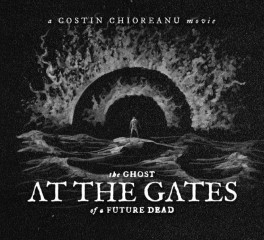
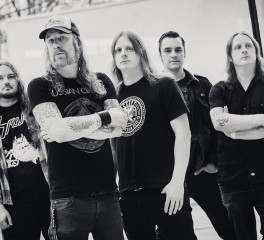
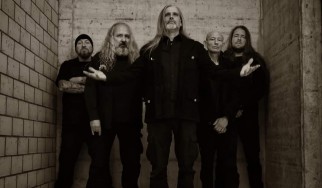
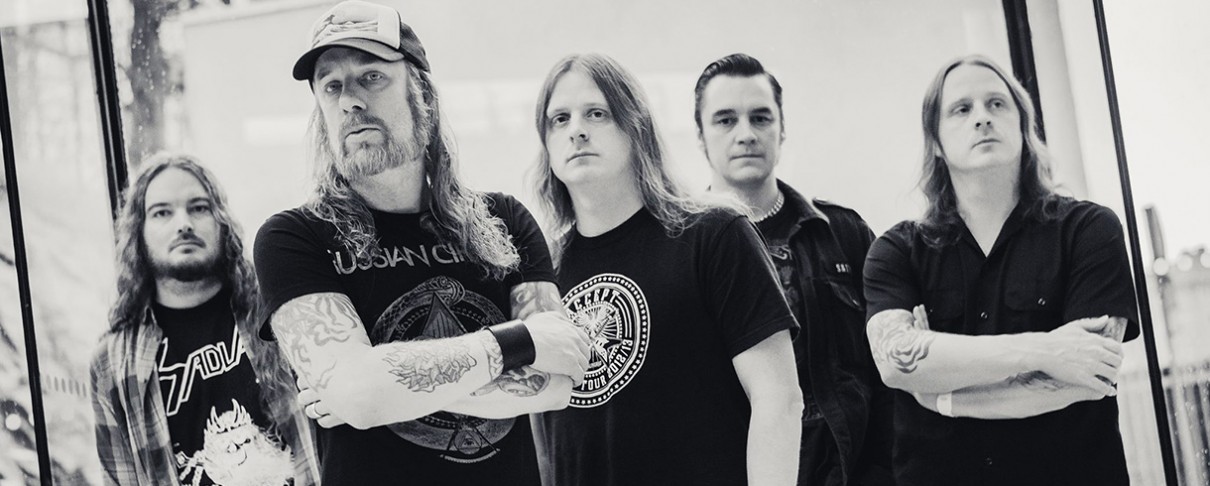
One of the pioneers of a whole death metal scene, originated from a village close to Gothenburg, At The Gates are going to release their latest album in a couple of weeks. With this in mind, along with the heartbreaking news of Tomas Lindberg's passing, we found the space and time to chat with Anders Bjorler, the guitarist and co-founder of the band, who returned after a long period of absence. Read below about the special from the recordings of "The Ghost Of A Future Dead", his decision to leave and return eventually to the band and how bands can benefit from using AI.
Hello, Anders. Welcome. I'm Alkis from Rocking.gr.
Yeah, thank you.
It's so nice to meet you. First of all, I would like to express my sincere condolences for Tomas loss. It has been also hard for me, so I cannot imagine how it is for you and his family. So, the new album is the main idea here behind this interview. I would like to first congratulate you on this new release. I have listened it to a lot, and I think that it captures the legacy of At the Gates, but it also respects the whole discography and the whole history. I wanted to ask, was this the most intense period of writing and recording for the band?
I mean, the whole album was completed before he (Tomas) was diagnosed. So we started in the summer of 2023. That was a pretty inspiring and creative period. Pretty trouble-free. Tomas and the other guys were really happy I was back in the band and they had newfound energy somehow with me being back. And Thomas said, his wish was going back a little bit to a simpler style of arranging, like "Slaughter Of The Soul", "At War With Reality", because they have made some progressive style parts for the last two albums. And I mean, me and Jonas started writing and we wrote like 50-50. And from July till December 2023, it was pretty smooth and we just sent demos back and forth. And then we had some rough song sketches. We sent them to Adrian. He was drumming and put down drum tracks. Martin had some interesting arrangements, ideas as well. So I mean, everything was pretty much done by December. And then Tomas was diagnosed before Christmas. But the whole process was up until then, it was pretty smooth.
So, I read, that the recordings were not like the usual way that you usually record. You recorded first the vocals. Is that correct?
Yeah, of course. We had the studio booked for February, but then when he called us in December, he said they found something at the dentist office and he got a referral to oncologist. And then we discussed with Tomas that the appropriate thing would be to still record the music. The plan for us was to record the vocals later in the spring. Hopefully everything had gone well and stuff like that. But he had recorded demo tracks in October, but in December he was missing like the three last ones. So the day before surgery in January, he recorded the last. three. Just to be safe, we had everything, like demos of everything.
If he would have been diagnosed earlier, we don't know if there would have been a record
From what I can see from the concept, it seems to be darker than the previous releases. However, as you say, it was not the darkest period because it was still hopeful at that point. Was the concept connected anyway to Tomas' health situation.
Not really, because he had the whole concept. It was done. I mean, all the lyrics was also done. So the only thing that changed afterwards was that we started working on the cover and that he changed the title, because the working title for the album was "The Dissonant Void". But then after the surgery and radiation therapy, he was on heavy medication. I mean, he was having nightmares and he changed the title to "The Ghost Of A Future Dead". But everything else was pretty much the same. That's before he was diagnosed. So I mean, the album was done. If he would have been diagnosed earlier, we don't know if there would have been a record.
In retrospect, I think he had some doubts that he might not pull through in the end
How did the title come up in his mind. What does this mean for you?
We didn't really talk about it that much, but now in retrospect, I think he had some doubts that he might not pull through in the end. Maybe not the same year, but maybe some years down the line. So this would be like a premonition of what to come or something like that. Yeah. It's a really powerful title. It's Tomas' title.
And one of the things that I noticed on the album is that there are two Swedish tracks, one of them has a suitable title "Forgangligheten".
Easiest transcribed as the withering or something. The decay. Something like that. That was an idea Tomas had, to do a whole album in Swedish. But he wrote one lyric for "Det Oerhorda", but he wanted to change that later into English, but we forced him to keep the Swedish one because everything sounded perfect and the verses, the rhyme, the rhythm in it was perfect. I mean, for non-Swedish speakers, it might be more exotic in a way as well.
You returned to the band after five years, if I'm not mistaken.
We announced it in 2017, but I actually left in the fall of 16.
I'm very easily bored. If I do something too much, like touring, play the same songs over and over again
I see, what was the decision behind your return?
I think mostly I'm very easily bored. If I do something too much, like touring, play the same songs over and over again. And the focus there was maybe, I mean, have you been on tour yourself or in a bus? It's a lot of airports and tour buses and waiting around like 95% of the time. So I mean, it's not really my favorite thing to do. I love playing live. I love writing music and record it in the studio, but that's such a small part of the job. And I was also feeling I didn't have any recent education. I was kind of feeling maybe go back to school, get an education, which I did. And I got a normal day job. But when they contacted me in 2022, Jonas and Tomas, my life situation was a little bit better. I was starting to miss it. And even though I wrote two tracks on "The Nightmare Of Being". As ghostwriter. Yeah. But then I had a job where I could work from home, I could work from everywhere. So I mean, we did the In Flames tour and I remember paying invoices on Autobahn in the tour bus. So I mean, I was working. So it worked out. I mean, it was fun to be back. It's special when you form a band when you're like 16 years old. It's a special bond. It's like childhood friends. So I mean, even if you have, you know, fights, there were some bad period after "Slaughter Of The Soul", of course, a couple of years, but we found ourselves, you know, again, and already when we released "The Haunted Made Me Do It", Tomas came down to the shows and I mean, we were friends and then he had a son and he was very changed by that as well. I mean, more humble, more, yeah, a different guy. But I mean, when I came back, it felt right again and Jonas and Tomas was really, and the other guys too, really inspired that I was back and really hungry to make new music.
And you also joined the Haunted in place of Patrick Jensen?
I mean, Jensen asked me last summer if there would be some instances where he asked me to fill in a couple of shows. It's maybe maximum of five shows a year. So it suits me fine. And it was, I mean, I just wanted to help out Jensen. And it's also, of course, nice to play with the old guys again, like Marco and Adrian. But then it's my brother that's family. So of course, I'm going to say yes. And then it's also nice to play with Ola for the first time. So yeah, that was pretty fun.
I was at the Athens show in Greece in 2025, and I was really amazed by the band. It was so energetic. The show was really powerful. I really, really enjoyed. It was on one of the top gigs I have been in 2025 and maybe for the past years.
Cool. So where was it? Like Gagarin? Like the backstage with 14 stories. It's fairly high up, a lot of stairs, you know, at the side of the stage.
…maybe do something more progressive, but maybe slightly more UK progressive, like King Crimson
Many fans also remember your solo album. I really enjoyed "Antikythera". It was one of my top albums for that year. Do you have any plans for a second maybe album?
I've been talking to Jonas a bit, maybe do something more progressive. It won't be the same as the solo thing, but maybe a slightly more UK progressive, like King Crimson and stuff like that. But I mean, we always talked about that, but we never did anything. He is always busy with The Haunted and he has done At The Gates when I wasn't in the band as well. So he's pretty busy, but I think it will happen in the future, hopefully.
Glad to hear that. Comparing the creative energy nowadays and back in the 90s, how different does it feel? Has the motivation changed or has it just evolved over time? What is now moving you to write music?
The biggest change, I think, is that we are more knowledgeable in music theory today. So, I mean, we know a lot more about music and we are more picky. And I mean, you can hear if it's half of BPM off on the drums and you can hear if it's 0.05% wrong on the tuning. And I mean, it's really, you get really, yeah, I mean, occupational hazard. I mean, you know, you have listened to so much for like 40 years or 35 years. So it's, but in the beginning, I kind of miss that energy, like that youthfulness. We were really, really, we thought we were going to change the world. We thought we were.
It's hard to find the motivation sometimes because you get a little bit more lazy
But you did.
Yeah, I mean, yeah, but we thought we were the Beatles or Rolling Stones or something. But we were this kind of crazy death metal bands with band with a lot of strange influences. I miss that energy and that focus that we had then. I mean, I'm 53 now. It's hard to find the motivation sometimes because you get a little bit more lazy. You want to spend more time with the family and friends like that. So, yeah. So that's the big difference from previous.
Tomas was very focused on becoming like this big band. I didn't feel the same way. I was more into, I like creating music
I don't know if you understand the legacy of At The gates now. Had you not stopped, do you know how things would have evolved ? I think that your legacy is really, really rich for the whole death metal music and for the Swedish scene. So how would you believe this would evolve?
But I think I'm pretty worried for my own sake, because I'm so impulsive and emotionally driven, so that leaving the band was a very emotional decision. But it was also like 10 months of touring without paying, without getting paid and a lot of work. And we weren't ready for that. We were only 20 years old. So we were early, we were young, we were, there were a lot of alcohol, of course. And some minor fights, but nothing serious. But I think Tomas was very focused on becoming like this big band. I didn't feel the same way. I was more into, I like creating music. And it's the same now. It's all about creating art. I'm not interested in a career. I'm not interested in being recognized on the streets and stuff like that. So I don't even like interviews. Sorry. Tomas used to do all the interviews and the singers in The Haunted did all the interviews. So it's pretty new for me. But I'm pretty shy guy. But I mean, creating music, and that's the thing that always was important to me, the music itself, but not fame. I'm not interested in it.
I understand. So maybe you agree with some bands nowadays that wear masks and no one knows who they are. Like Ghost or Gaerea.
Yeah, maybe. But it's also a gimmick because that sells. the mystery of it, So sometimes it's mostly a career thing to do that from the start. Like KISS, like Slipknot, like Ghost. Yeah. Yes, But you said something about if we would have continued, but since we stopped in 96 after "Slaughter of The Soul", the reunion shows wouldn't have been possible if we had continued. So I mean, there was a good, a lot of good things as well by us waiting 12 years.
And from what we have seen in the future, that reunion was not something a lot of people were expecting. Nowadays, bands disband and, in 5 or 10 years, they will come back with a reunion tour. It's like a marketing thing, I think, nowadays. But back then, it was something that we didn't expect.
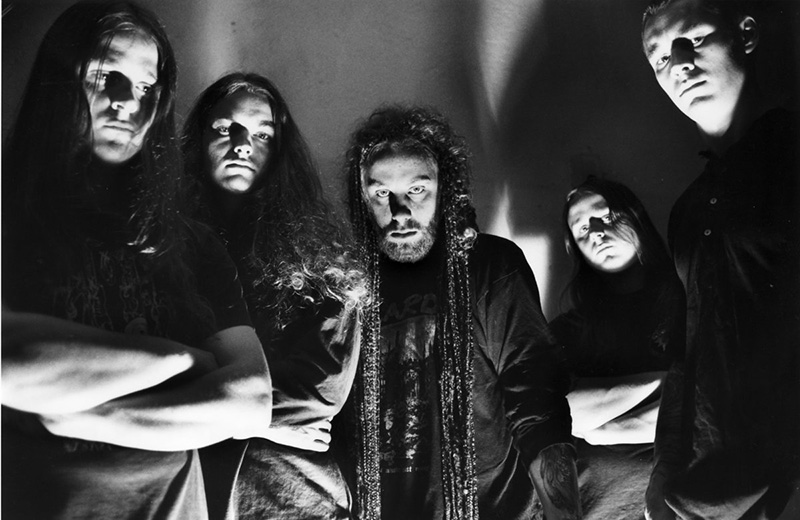
No, but the plan was only to do one year. But when we came to September, I think the last ones were in Greece, in Athens, I think, in 2008. And we felt that we haven't played Asia, we haven't played South America, we haven't played anywhere. So I mean, that's the reason why we did it again in 2011. But after that, there were some kind of years we didn't know what to do, like 2012, 2013. But then we had a discussion and then we did "At War With Reality" and then it just continued.
Lucky us.
Yeah, but yeah, but. It was such a different experience as well, because back in the day we were like 20 years old and we drank A lot. And I mean, we weren't the same people. But now Tomas had a son, he was more balanced. He was working as a teacher. Everybody else had jobs and gone through life. We were in our maybe 40s, maybe 35, 40s. more balanced as people, as a group, more like friends, almost like family. So it was more, it was a better experience around that time.
I think you can do new stuff, especially with production, like sound, different sounds, create new sounds
Okay, so taking you a bit back to the creative process that we mentioned earlier, I don't know if you have read a quote from Stephen Wilson from Porcupine Tree that he said that almost all great songs have already been written because the notes are, okay, limited. So what the musicians can do now is to offer like new sonic worlds through technology. Is this something in the perspective that you agree with?
Maybe if you're confined to a certain style of music. I mean, if you do pop and rock music, that is very simple, then it would be a problem because about regarding the chords and vocal melodies and stuff like that. But as long as you're a little bit experimental, it's no problem. And especially if you don't, if you're not musically schooled, you're thinking outside the box and you're not thinking in formulaic like arrangements. So it's pretty weird when you hear like people that just took up a guitar and they have no training whatsoever. And it just sounds very weird, but interesting. I think you can do new stuff, especially with production, like sound, different sounds, create new sounds.
Exactly. And through technology, we know that AI is already taking more and more credit in music creation. I would say also in the album covers or some videos. We see some videos that are completely made by AI. for like a tiny amount of the money that you would spend on a real creator. With this in mind, how can we as fans and you as the artist benefit from using artificial intelligence in the in music? Is there any way?
Yeah, I think so. I mean, for those that kind of work that replicates artists. I would say like having a like a like a water stamp watermark that says it's AI and like a digital digital imprint like an XML XML file that holds the contributors. I mean the What do you call it? The owner of the rights. So you get to share if it's based on something you did. Something like that. But I mean, tool-wise, I mean, Ola just exported some new haunted tracks for me to practice to. And he just double-clicked in Logic a song, and then he gets stems, he gets the drums, bass, guitars, vocals, all separated as a different tracks. I mean, those kind of tools are cool. And I guess like the text tools with ChatGPT and stuff like that. So I mean, everything that helps you is good. But it's becoming lazy when it replicates. other artistic work. That's when you have to draw the line, I think. But as long as you're compensating the original artist, maybe.
That would be really, really useful, I believe, as long as it does not interfere into the creative process.
Yeah. But I think I see a little like people are getting tired of the AI thing anyway. So, I mean, people are going back there. They're buying vinyl. They're going to shows. They want the physical. It's hard to do a live show with AI.
I got my first guitar in February 1990. So I mean, a couple of months before we started At The Gates. So I had to practice a lot
For sure. So, taking you a bit back in the early days, if you could speak to your 20-year-old self now, back in the early Gothenburg scene, what do you think would surprise you most about how all this journey, this musical journey, has evolved and unfolded?
I probably wouldn't have believed it. So... But it's so hard. I mean, we were from this tiny little village south of Gothenburg. It's not, it's not even Gothenburg. It's really, really small. So I mean, yeah, I wouldn't have believed it. I mean, we thought we did something unique and we did. But I didn't necessarily think we were the best band in the world. I mean, The big thing for me is that we were really bad at playing our instruments. And all the time we were practicing. So at around maybe terminal speed disease, we started to learn a bit more. And from there on, it's better at least. So the real struggle in the beginning was that we couldn't play. But I mean, I got my first guitar in February 1990. So I mean, a couple of months before we started At The Gates. So I had to practice a lot. And we recorded the first like "Gardens Of Grief" mini album in the winter, December and January. So I mean, that's only 10 months of practicing.
Replacing Thomas, it would be impossible anyway, because he is such a huge character
In about a month the new album is going to be released. What are the band's plans now are you are you going to promote the record with live performances ?
No, nothing. Because we have focused so much on getting the album the way Tompa wants it. And I mean, everything was done by the time he was diagnosed, but he worked on the album with his friend Robert and getting that done. But now we have just been working with that in like, okay, there was a long period when we were just waiting for him to get better. But the last spring when he got really bad we started to make the final like the plans to start work on the album because then we knew he was never gonna be able to sing so it's more like we have been working on this legacy thing with Tomas and trying to get that out and I mean that's been our focus we haven't really we haven't talked about the continuation at all we haven't talked about it I know Jonas said something in an interview, but we haven't talked about it. And I mean, replacing Thomas, it would be impossible anyway, because he is such a huge character. And yeah.
Yes, I totally agree with this. And so for the time being, I think that's the natural conclusion.
For the time being, we're focusing on the release and making that the best we can. And then we'll see what happens. I maybe play some progressive with my brother. I don't know.
I really hope. I don't want to miss your songwriting. I enjoy it.
Yeah, I will do something, but it won't be very commercial, maybe.
Russian classical music has influenced At The Gates a lot
Could you name any interesting albums/bands you listened to recently ?
The thing is, I don't really listen to albums like that anymore, but I listen to everything like 60s jazz, like a Coltrane, Miles Davis, stuff like that. My wife plays me a lot of like ambient, really dark. even pop music, like new stuff. I mean, everything that gives you good vibes, that it's good, I guess. But then it's also, of course, I listen to classic metal and I like the 70s, of course, like Black Sabbath, Rainbow and, but I mean, I still listen to a lot of Slayer and Trouble, stuff like that as well. I mean, it's hard to not to. It could be anything. But I don't listen to modern metal. So if I listen to metal, it's up until Morbid Angel and stuff like that, when it came out in 89, 90. But not so much after that. So I listen to the old stuff because that's what I grew up with. So if it's modern music, it's not metal. It's something else. So it could be anything. film music, soundtrack, anything. I was into, I'm also into a lot of, you know, old Italian, Spanish cult movies, so a lot of Spaghetti Western, Gallo Thrillers, and yeah, Cannibal Zombie. So a lot of Italian soundtrack music. Brian Eno. Yeah, Ennio Morikone, to mention the most famous, but there are like 100 under him. So yeah. Russian classical music, it's very good. It has influenced At The Gates a lot, I think. Like Tchaikovsky, Shostakovich, Prokofiev, really important. Especially the dissonant harmonies. So Jonas listened to that a lot as well.
So in order to end the interview feel free to address your fans.
Check out our new album. It's the legacy album with Thomas and I hope you like it. I think there is something from all our periods with At The gates. And I hope you like it.
Okay, thank you very much, Anders, for your time. It was a pleasure.